

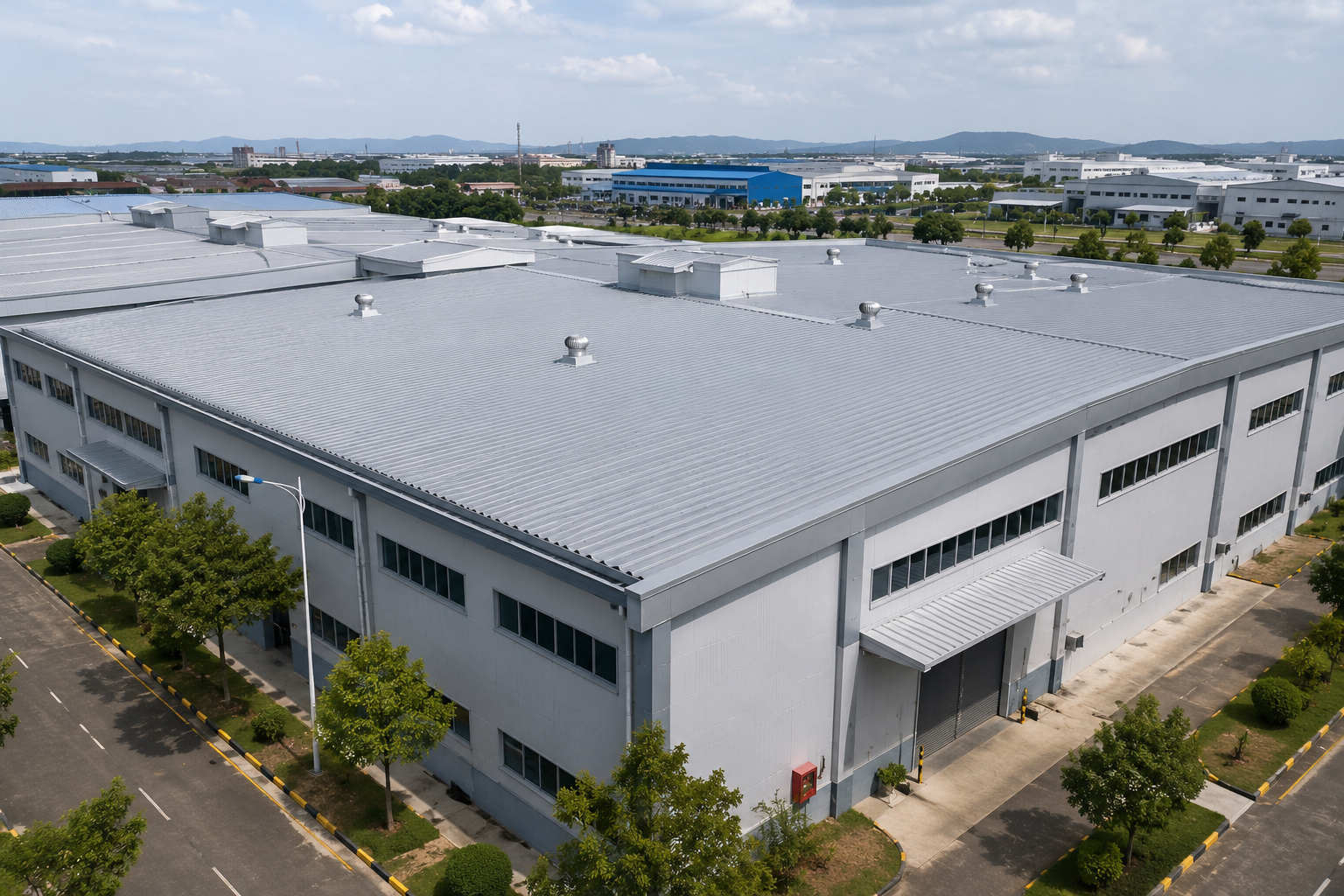
When choosing a waterproof coating for an exposed roof, you may come across two common types: fibered and non-fibered roof coatings.
Both can provide waterproof protection, but fibre reinforcement gives the coating additional mechanical strength that can be useful for roofs exposed to movement, heat and surface wear.
What Is a Fibered Roof Coating?
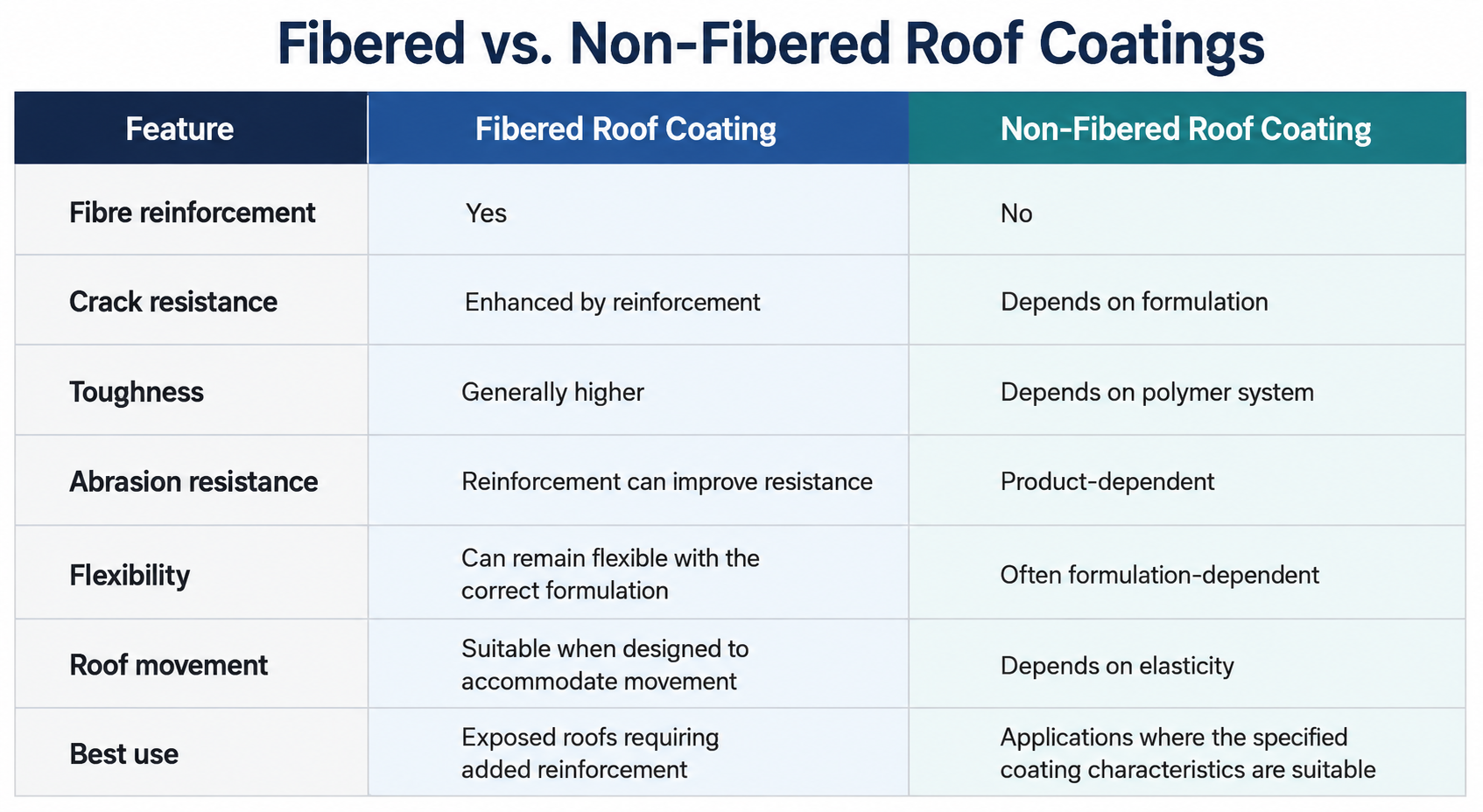
A fibered roof coating contains reinforcing fibres within the coating formulation. These fibres help strengthen the cured waterproof membrane and improve its resistance to cracking, abrasion and mechanical stress.
For exposed roofs, this added reinforcement can be beneficial because the waterproof layer is directly exposed to changing temperatures, UV, rain and roof movement.
What Is a Non-Fibered Roof Coating?
A non-fibered coating does not contain reinforcing fibres. Its performance depends mainly on the polymer formulation, flexibility, adhesion and application thickness.
Non-fibered coatings can still provide effective waterproofing, especially where flexibility is the main requirement. However, fibre-reinforced coatings may offer additional toughness and crack resistance for exposed applications.
Fibered vs. Non-Fibered Roof Coatings
Why Fibre Reinforcement Matters for Exposed Roofs
Roof surfaces naturally expand and contract as temperatures change. Over time, repeated movement can place stress on the waterproof membrane. Reinforcing fibres help strengthen the coating while improving crack resistance, toughness and durability.
However, fibres alone are not enough. A good roof coating still needs sufficient flexibility to accommodate movement without becoming brittle.
QL Exposed Waterproof: Fibre-Reinforced Roof Protection
QL Exposed Waterproof is formulated with modified emulsified polymers, reinforcing fibres and selected water- and ageing-resistant additives.
Its reinforcing fibre technology helps improve:
• Crack resistance
• Toughness
• Abrasion resistance
• Overall durability
• Flexibility under thermal movement
The cured membrane is also designed to resist heat, UV exposure, prolonged water contact, blistering and delamination. QL Exposed Waterproof is suitable for various roof types, including both new waterproofing and repair applications.
Fibre Inside the Coating Does Not Replace Detail Reinforcement
A fibre-reinforced coating and reinforcing fabric serve different purposes.
QL Exposed Waterproof contains reinforcing fibres within the coating itself to improve overall toughness and crack resistance. However, areas that experience concentrated movement or stress—such as cracks, joints, corners and penetrations—may still require compatible reinforcing fabric.
These critical details should be properly repaired and reinforced before or during waterproofing application. Fibre reinforcement within the coating does not replace proper surface preparation, crack treatment or detailing.
Application Thickness Also Matters
Even a high-performance waterproof coating may underperform if it is applied too thinly.
For QL Exposed Waterproof, the recommended finished thickness is approximately 1.0 mm, with a reference consumption of approximately 1.5–2.0 kg/m², depending on substrate condition, surface profile, application method and required thickness.
The coating should be applied evenly in multiple coats, allowing each coat to dry before applying the next coat in a perpendicular direction. Correct thickness and application are just as important as choosing the right waterproofing product.
Which Roof Coating Should You Choose?
The right roof coating should be selected based on the condition of the roof, expected movement and exposure—not fibre content alone.
For exposed roofs where additional crack resistance, toughness and durability are required, a fibre-reinforced waterproof coating can provide added protection.
QL Exposed Waterproof combines reinforcing fibres, flexibility and weather resistance to provide durable waterproofing protection for exposed roof surfaces.
Protect Your Roof with QingLong Waterproofing
Choosing a roof waterproof coating should not be based on waterproofing alone. For exposed roofs, the coating also needs sufficient strength, flexibility and resistance to long-term surface movement.
QL Exposed Waterproof combines reinforcing fibre technology with a flexible waterproof membrane to provide durable protection for exposed roof applications. Contact QingLong Waterproofing for product recommendations, coverage information and waterproofing consultation for your project.
Frequently Asked Questions (FAQs)
1. Is fibered roof coating better than normal roof coating?
Not automatically. Fibre reinforcement can improve crack resistance, toughness and abrasion resistance, but overall waterproofing performance also depends on the coating formulation, substrate preparation, thickness and application quality.
2. What is the main advantage of fibres in waterproof coating?
The fibres reinforce the cured coating and help improve its mechanical strength, crack resistance and overall durability.
3. Can fibre-reinforced coating cover existing roof cracks?
Minor movement may be accommodated by a suitable flexible coating, but existing cracks and defects should still be repaired before application. Critical cracks, joints and penetrations may require additional reinforcing fabric.
4. Is QL Exposed Waterproof flexible even though it contains fibres?
Yes. QL Exposed Waterproof is designed to combine fibre reinforcement with a highly elastic polymer membrane capable of accommodating repeated thermal movement.
5. Is QL Exposed Waterproof suitable for exposed roofs?
Yes. It is specifically classified as a Fibre-Reinforced Exposed Coating and is recommended for various exposed roof and building applications.


