

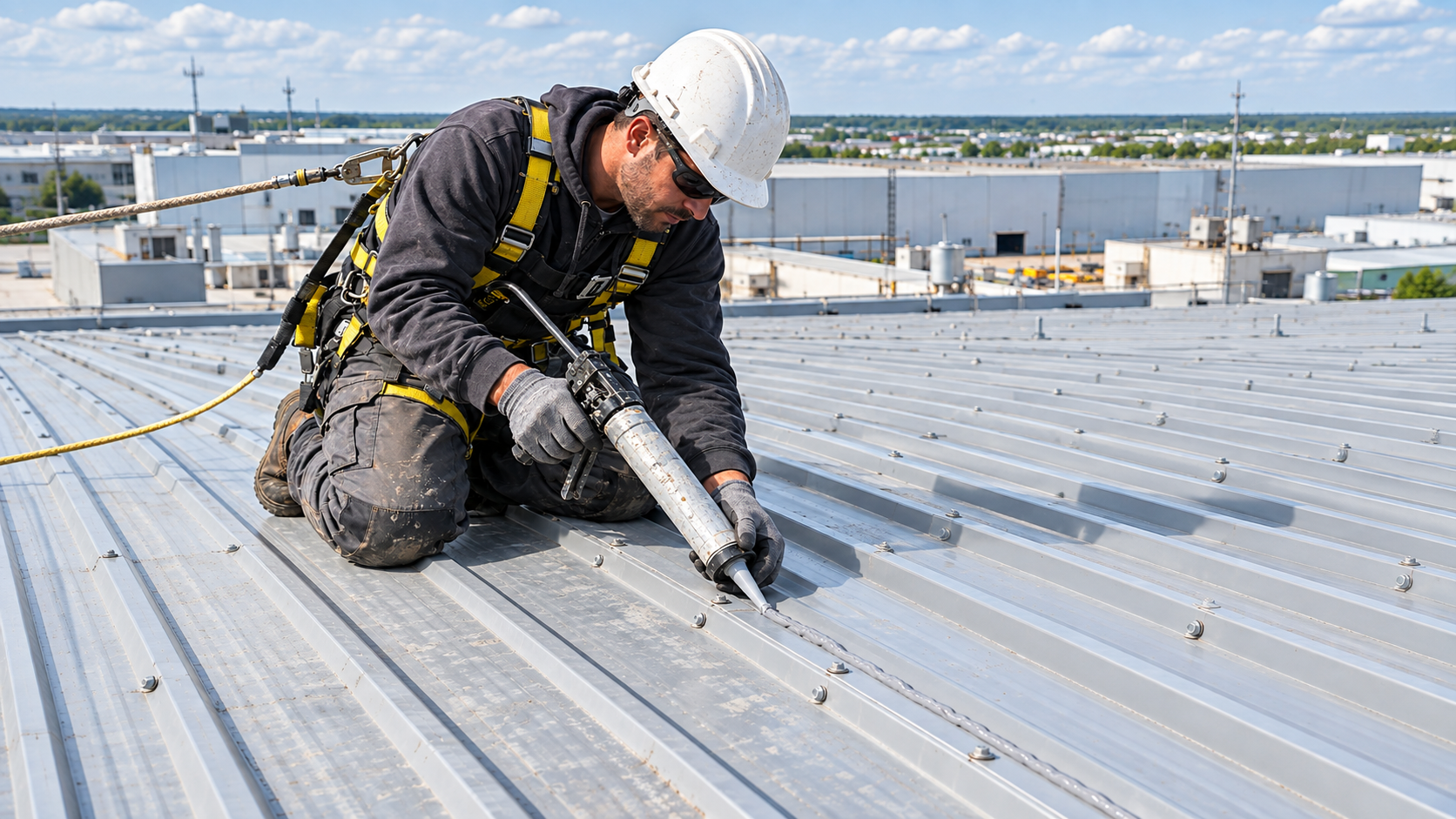
Metal roofs are widely used for factories, warehouses, commercial buildings and shoplots across Malaysia. They are durable and practical, but prolonged exposure to Malaysia's intense sunlight, heavy rainfall, humidity and temperature changes can eventually lead to roof leaks.
A leaking metal roof is not always caused by a visible hole or damaged roof panel. Common problems include loose or deteriorated fasteners, failed sealant, open laps and seams, damaged flashing, corrosion, and water entering around roof penetrations.
A proper metal roof repair should therefore begin with identifying the actual source of water entry, rather than simply sealing the area where the leak appears.
At QingLong Waterproofing Malaysia, our approach is to inspect the roof condition, identify the likely leak path and recommend a waterproofing method based on the roof material, damage and site condition.
This guide explains the common causes of metal roof leaks, what should be checked before repair, and when a roof coating or other waterproofing system may be appropriate.
Metal Roof Repair: What Usually Causes Leaks?
Metal roofs are exposed to Malaysia's weather conditions throughout the year. Continuous sunlight, rain, humidity and temperature changes can cause the metal panels and their connections to expand and contract. Over time, this movement can affect fasteners, seams, joints and flashing details.
Some of the most common causes of metal roof leaks include:
1. Loose or deteriorated fasteners
Exposed-fastener metal roofs rely on screws and washers to secure the panels. Over time, screws can become loose and rubber washers can deteriorate. Water may then enter around the fastener points during heavy or wind-driven rain.
2. Open seams and panel laps
Metal roof panels are often joined through overlapping sections. If the sealant deteriorates or the panels move over time, small gaps can develop. These gaps may allow rainwater to enter beneath the roof system.
3. Flashing failure
Flashing around roof edges, walls, ridges, vents and other transitions is particularly important. A small gap or failed seal around these details can become a significant source of water ingress.
4. Roof penetrations
Air-conditioning units, pipes, vents, skylights and other roof penetrations require proper waterproofing details. Water may enter around the penetration even when the surrounding metal roof appears to be in good condition.
5. Rust and corrosion
Scratches, damaged protective coatings, cut edges and areas where water remains for extended periods can contribute to corrosion. If corrosion progresses, pinholes or weakened sections may eventually develop.
6. Previous repair work
Some metal roof leaks become more difficult to repair because of multiple layers of old sealant, incompatible materials or repairs carried out without addressing the original leak source.
Applying another layer over the existing problem does not necessarily solve the underlying issue.
Safety and Preparation Before Metal Roof Repair
Metal roofs can become extremely slippery when wet, especially during Malaysia's rainy weather.
Before inspection or repair work:
• Work only when the roof surface is safe and reasonably dry.
• Use appropriate fall protection for elevated or steep roofs.
• Be careful around sharp metal edges.
• Avoid stepping directly on areas that may be weak or corroded.
• Use appropriate access equipment for industrial and commercial roofs.
If the roof condition is uncertain, arrange for a qualified waterproofing contractor to conduct the inspection.
For factories, warehouses and commercial buildings, roof inspection should also consider the condition of the overall roof system rather than focusing only on the location where water is visible.
Step 1: Find the Actual Metal Roof Leak Source
One of the biggest mistakes in roof repair is assuming that the location of the ceiling stain is the location of the roof leak. Water can travel underneath metal roof panels before appearing inside the building. This means a leak appearing near one location may actually originate several metres away.
Start from inside the building
Look for:
• Water stains on ceilings
• Damp areas
• Peeling paint
• Water dripping from joints
• Signs of previous leakage
• Corrosion around internal metal components
Once the affected area has been identified, inspect the roof area above and around it.
Inspect the metal roof systematically
Check for:
• Loose screws
• Damaged washers
• Open panel laps
• Cracked sealant
• Damaged flashing
• Rust or corrosion
• Holes and punctures
• Damaged roof penetrations
• Areas where water may accumulate
Do not immediately apply waterproofing material simply because a visible gap has been found. The first priority is to understand how water is entering and travelling through the roof system.
Step 2: Choose the Right Metal Roof Repair Method
Not every metal roof requires the same repair method. The solution depends on the roof condition, leak source and extent of damage.
Loose screws may need replacement, open seams or failed flashing may require resealing, while corrosion, punctures or widespread ageing may require repair, reinforcement or a suitable roof coating system. Severely damaged panels may need replacement.
Roof coating should not be used to cover mechanical problems. The leak source should be identified and repaired first before applying the appropriate waterproofing system.
Step 3: Prepare the Metal Roof Surface
Proper surface preparation is one of the most important stages of metal roof waterproofing. A waterproofing coating can only perform properly when the substrate is suitable for application.
Before applying a roof waterproofing system: Remove loose material
Remove:
• Loose old sealant
• Flaking paint
• Loose coating
• Dirt and debris
• Unstable rust
•Clean the surface
Oil, dust, dirt and oxidation can affect adhesion.
The metal roof should be properly cleaned according to the requirements of the selected waterproofing system.
Allow the roof to dry
Do not apply waterproofing materials onto a wet or contaminated surface unless the specific product system is designed for those conditions.
Treat corrosion
Light surface rust and severe corrosion should not be treated in the same way. Where metal has become heavily corroded, weakened or perforated, coating alone may not be sufficient.
The damaged section may require repair or replacement before waterproofing work proceeds.
Step 4: Repair Common Metal Roof Problems
A) Loose Fasteners and Damaged Washers
Common signs:
• Screws sitting higher than surrounding fasteners
• Cracked rubber washers
• Rust around screw heads
• Water marks below fastener lines
• Leakage during heavy rain
• Repair approach
Where fasteners are damaged or no longer holding properly, they should be repaired or replaced rather than simply covered with sealant.
After the mechanical problem has been addressed, appropriate waterproofing or sealing can be applied to the affected detail where required. It is also useful to inspect surrounding fasteners because deterioration may not be limited to one screw.
B) Metal Roof Seams and Panel Laps
Common signs:
• Visible gaps between panels
• Cracked sealant
• Missing sealant
• Water entering along panel joints
• Repeated leakage after previous spot repairs
• Repair approach
First confirm that the metal panels are properly secured. Where movement or gaps are present, the joint may require reinforcement before applying a compatible waterproofing material.
For larger or repeatedly failing seams, a reinforced waterproofing detail may provide a more suitable solution than simply applying another bead of sealant.
C) Standing Seam Metal Roof
Standing seam roofs require a different repair approach from exposed-fastener metal roofs.
Common problem areas include:
• Ridge details
• End caps
• Wall transitions
• Flashing
• Roof penetrations
• Joints and termination details
Avoid drilling or modifying standing seams without understanding the roof system. For complex standing seam systems, professional inspection is recommended before repair work begins.
D) Flashing, Pipes and Roof Penetrations
Roof penetrations are common sources of water ingress.
Inspect around:
• Pipe boots
• Ventilation openings
• Air-conditioning equipment
• Skylights
• Ducting
• Roof-mounted equipment
• Wall-to-roof transitions
Look for:
• Cracked sealant
• Loose flashing
• Gaps around the penetration
• Deteriorated rubber components
• Signs of water staining
If the penetration component itself is damaged, replacing or repairing the component may be necessary before waterproofing.
E) Holes, Punctures and Impact Damage
Small punctures can occur from maintenance work, dropped objects or other activities on the roof.
Small damage
Minor punctures may be repaired using an appropriate waterproofing and reinforcement system after proper surface preparation.
Larger damage
If the metal panel is torn, severely deformed or structurally compromised, replacing the damaged section may be more appropriate than simply applying coating.
The repair method should allow for normal movement of the metal roof.
F) Rust and Corrosion
Rust is a common concern for older metal roofs.
Look for:
• Rust around screws
• Flaking metal
• Rust along cut edges
• Corrosion around joints
• Pinholes
• Rust stains
• Areas where the protective coating has failed
Repair approach
Loose rust should be removed and the surface stabilised before waterproofing. If corrosion has already created holes or significantly weakened the metal, the damaged area should be repaired before applying a waterproofing coating.
A roof coating can help protect suitable metal roof surfaces, but it should not be used to hide severely deteriorated metal.
Step 5: When Should You Use Sealant, Tape or Roof Coating?
Different waterproofing materials have different purposes.
Sealant
Sealants can be useful for:
• Small joints
• Flashing edges
• Fastener details
• Transitions
• Localised gaps
However, sealant alone is not always suitable for widespread roof deterioration.
Reinforcement Tape
Reinforcement can be useful around:
• Seams
• Joints
• Cracks
• Transitions
• Areas subject to movement
The substrate should be properly prepared before reinforcement is installed.
Roof Waterproof Coating
For ageing metal roofs with broader surface deterioration, a suitable roof waterproof coating can form a continuous protective waterproofing layer across the roof surface.
QingLong's roof waterproofing solutions are designed for external roof applications and can be considered for suitable metal roof conditions.
Fibre-Pro Exposed Waterproof is a fibre-reinforced exposed waterproofing product designed for external waterproofing applications. Its fibre reinforcement helps the coating accommodate movement and crack-related conditions, while the system is also designed to withstand outdoor exposure, UV and weather conditions.
However, roof coating should be considered after the roof condition has been properly assessed.
Loose fasteners, failed flashing, severe corrosion and structural damage should be addressed first.
Common Mistakes That Cause Metal Roof Leaks to Come Back
Many recurring metal roof leaks are caused by the repair method rather than the original roof problem.
Common mistakes include:
1. Repairing only where the water appears
The visible drip point may not be the actual entry point.
2. Applying waterproofing over a dirty surface
Dust, oil, loose rust and old unstable coating can affect adhesion.
3. Tightening damaged screws without replacing them
A damaged fastener or washer may continue to leak even after tightening.
4. Applying coating over active mechanical problems
Roof coating cannot replace a loose panel, damaged flashing or structurally compromised metal.
5. Ignoring roof movement
Metal expands and contracts with temperature changes. Rigid repair materials may crack if they cannot accommodate movement.
6. Covering widespread rust without addressing the substrate
If the metal is already severely corroded, coating alone may not provide a reliable long-term repair.
7. Focusing only on the roof surface
Drainage, flashing, penetrations and surrounding building details can all contribute to water ingress.
When Should You Call a Professional Waterproofing Contractor?
A professional roof inspection is recommended when:
• The leak source cannot be identified
• Leakage keeps returning after previous repairs
• The roof is high or difficult to access
• There is widespread corrosion
• Multiple roof areas are leaking
• Large areas require waterproofing
• The building is a factory or warehouse
• Roof penetrations are complicated
• The metal panels may require replacement
• The roof is approaching the end of its service life
For industrial buildings, a proper inspection is particularly important because roof leakage can affect production areas, machinery, stored goods, electrical systems and daily operations.
QingLong Waterproofing Malaysia provides waterproofing solutions for factories, warehouses, commercial buildings and other industrial properties, with the repair approach based on the actual site condition.
Conclusion
A leaking metal roof should not be treated as a simple "find the drip and apply sealant" problem.
In Malaysia, metal roofs are exposed to intense sunlight, heavy rain, humidity and continuous temperature changes. Over time, these conditions can affect fasteners, seams, flashing, protective coatings and roof penetrations.
A more reliable repair process starts with:
Inspect → Identify the leak source → Prepare the surface → Repair the underlying problem → Reinforce where required → Apply the appropriate waterproofing system.
For suitable ageing metal roofs, a roof waterproof coating such as QingLong's Fibre-Pro Exposed Waterproof can form part of a broader waterproofing and protection system.
For factories, warehouses, commercial buildings and larger roof areas, professional inspection is recommended before deciding whether localised repair, roof coating or a more extensive waterproofing solution is required.
Need help with a leaking metal roof? QingLong Waterproofing Malaysia can inspect the roof condition and recommend a suitable waterproofing approach based on the actual site.
Frequently Asked Questions (FAQs)
1. Can I repair a leaking metal roof with sealant?
Sealant can be useful for certain joints, flashing details and localised gaps. However, it may not solve the problem if the actual cause is a loose fastener, damaged flashing, open seam or deteriorated roof panel. The leak source should be identified before selecting the repair method.
2. Can I apply roof coating over an old metal roof?
In suitable conditions, roof coating can be used as part of a broader metal roof waterproofing or maintenance system. However, the surface must be properly prepared, and existing loose coating, severe rust, damaged panels and mechanical problems should be addressed first.
3. Why does my metal roof still leak after waterproofing?
Repeated leakage may occur when the original water-entry point was not identified, or when the repair only covered the visible symptom.
Other possible causes include:
• Water travelling underneath the metal panels
• Failed flashing
• Loose fasteners
• Open seams
• Damaged roof penetrations
• New areas of deterioration
A systematic inspection can help determine whether the previous repair addressed the actual source.
4. Is roof coating suitable for an old metal roof?
It depends on the condition of the existing roof. If the metal panels are still structurally sound but the waterproofing layer is deteriorating, a suitable roof coating system may be considered.
If the metal is severely rusted, perforated or structurally weak, repair or replacement may be required before coating.
5. How often should a metal roof be inspected in Malaysia?
There is no single inspection interval suitable for every building.
However, regular inspection is particularly useful for buildings exposed to heavy rainfall, strong sunlight, coastal conditions, industrial environments or significant temperature changes.
It is also advisable to inspect the roof after major storms or when signs of leakage first appear.
6. How does QingLong Waterproofing Malaysia approach metal roof leaks?
The first step is to understand the roof condition and identify the likely source of water ingress.
Depending on the site, the solution may involve localised repair, seam or flashing treatment, reinforcement, roof waterproof coating or a more extensive waterproofing system.
For larger industrial and commercial roofs, the repair approach should be planned based on the actual roof condition rather than applying the same solution to every leak.


