

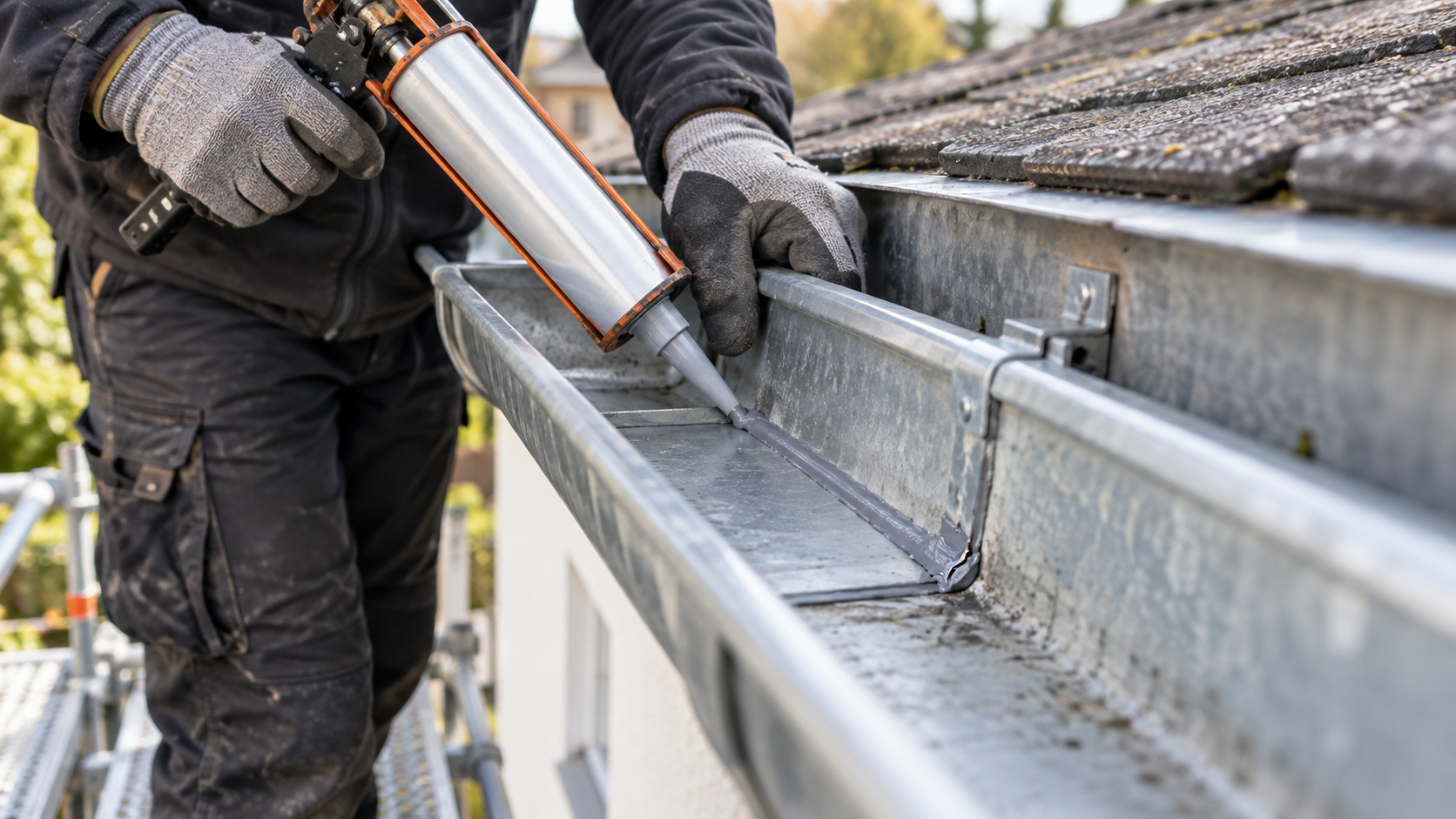
A leaking gutter may look like a small maintenance issue, but if left untreated, rainwater can run down walls, damage fascia boards, cause dampness and eventually affect areas around the building.
In Malaysia, gutters are exposed to frequent heavy rain, strong sunlight and temperature changes. Leaks commonly occur around joints, seams, screws, cracks and rusted sections.
The key is to identify the leak source first and choose a repair method suitable for the gutter's condition.
What Causes Gutters to Leak?
Common causes of gutter leaks include:
• Loose or missing screws
• Deteriorated washers
• Open or poorly sealed gutter joints
• Cracks in the gutter
• Rust and corrosion
• Blocked gutters causing water to pond
• Failed previous sealant repairs
• Movement caused by thermal expansion and contraction
A visible drip is not always the actual source of the problem. Water can travel along the gutter before appearing at another location.
Steps to Repair a Leaking Gutter
1. Remove leaves and debris
Clear leaves, dirt and other debris from the gutter, especially around the leaking area.
2. Clean and dry the surface
Remove dirt, loose coating, rust and failed sealant around the affected area. The surface should be clean and dry before waterproofing.
3. Repair the joint or crack
For leaking joints and seams, reinforce the affected area with a suitable waterproofing tape or membrane where required.
For damaged or severely corroded gutters, simple sealing may not be sufficient. The damaged section may need to be replaced.
4. Apply waterproofing coating
Apply a suitable waterproofing coating over the repaired area, making sure the joint, crack or surrounding surface is fully covered. For exposed gutters, choose a coating that can withstand UV exposure, rain and outdoor temperature changes.
5. Allow sufficient curing time
Allow the waterproofing system to dry and cure according to the product requirements. Avoid exposing the repaired area to heavy rain during the curing period.
6. Test for leakage
Once fully cured, test the repaired section with water and check whether water is still escaping from the joint or damaged area.
When Should You Replace the Gutter?
Waterproofing can help repair localised leaks, but coating alone may not be the right solution when the gutter has:
• Extensive rust or corrosion
• Large cracks or holes
• Severe deformation
• Loose or damaged sections
• Poor drainage or incorrect slope
In these situations, repairing the underlying problem is more important than simply applying another layer of sealant.
How to Prevent Future Gutter Leaks
Regular gutter maintenance can help reduce recurring problems.
• Remove leaves and debris regularly
• Check joints and fasteners
• Look for rust and cracks
• Keep downpipes clear
• Inspect after heavy rain
• Check previous repair areas for deterioration
Most importantly, don't repair only where water is visible. A proper inspection should determine where the water is entering and why the gutter is leaking.
Professional Waterproofing Inspection in Malaysia
For larger buildings, commercial properties, factories or gutters with recurring leaks, professional inspection can help identify whether the problem is caused by the gutter itself, surrounding roof areas, joints or drainage.
QingLong Waterproofing Malaysia provides waterproofing solutions for residential, commercial and industrial properties, with inspection focused on identifying the actual source of water leakage before recommending a suitable repair method.
If your gutter keeps leaking after repeated repairs, the problem may require more than another layer of sealant. Find the leak source first, then choose the right waterproofing solution.


