

Metal roofs are widely used for factories, warehouses, commercial buildings, workshops, and other structures because of their durability and relatively low maintenance requirements. However, a metal roof is not maintenance-free.
Over time, exposed fasteners, panel joints, overlaps, penetrations, protective coatings, and sealants can deteriorate. Small defects can gradually become leakage points, especially if they are not detected and repaired early.
Regular inspection, proper cleaning, timely repairs, and suitable waterproofing protection can help reduce leakage risks and extend the service life of a metal roofing system. This guide explains the common signs of metal roof deterioration, how to maintain the roof properly, and how suitable QingLong Waterproofing products can be incorporated into metal roof repair and waterproofing work.
Why Is Metal Roof Maintenance Important?
Metal roofing systems contain many components that work together to keep water outside the building. The metal panels themselves may remain in good condition while leakage develops around screws, seams, flashing, joints, penetrations, or damaged sections.
Regular maintenance helps identify these vulnerable areas before the problem spreads. A practical maintenance programme can help:
• Detect loose or deteriorated fasteners early
• Identify damaged seams and overlapping joints
• Prevent minor gaps from becoming active leakage points
• Control rust and corrosion before significant deterioration occurs
• Maintain existing protective and waterproof coatings
• Keep gutters and drainage paths clear
• Reduce the risk of water entering the building
Early maintenance is generally much easier than dealing with widespread roof deterioration after repeated leakage.
What Are the Common Signs of Metal Roof Damage?
When inspecting a metal roof, look beyond obvious holes or active dripping. Many roof leakage problems begin with relatively small defects.
1. Rust and Corrosion
Rust spots, exposed metal, and corrosion should be addressed early. As corrosion progresses, the metal section may become thinner and eventually develop holes or weak points.
2. Loose or Missing Fasteners
Metal roofing sheets are commonly secured with screws or other fasteners. Temperature movement, vibration, ageing, or installation issues can cause them to loosen. A loose fastener may create a small opening around the fixing point where rainwater can enter.
3. Failed Sealant
Sealants around screws, joints, flashing, vents, pipes, and other penetrations may harden, crack, shrink, or separate from the substrate over time. Once adhesion is lost, water can travel through the resulting gap.
4. Open Seams and Overlaps
Metal sheets expand and contract as temperatures change. Repeated movement can affect panel seams and overlaps, making these areas particularly important during inspection.
5. Peeling or Damaged Coating
If the existing protective coating begins peeling, cracking, blistering, or losing adhesion, the exposed area may become more vulnerable to moisture and corrosion.
6. Water Stains Inside the Building
Watermarks on ceilings, walls, structural members, or the underside of the roof can indicate that water is already entering the building. However, the visible stain may not be directly below the actual roof defect because water can travel along roof panels and structural components before appearing internally.
The original maintenance guidance similarly identifies corrosion, loose fasteners, damaged coatings, water staining, warped panels, and sealant degradation as important warning signs.
What Causes Metal Roof Leakage?
Understanding the source of the leakage is important before selecting a repair or waterproofing product. Common causes include:
Loose fasteners: Movement around screws can create openings that allow rainwater to penetrate.
Failed joints and seams: Overlapping metal sheets and panel joints can become vulnerable as the roof moves and ages.
Deteriorated sealant: Old sealant can lose flexibility or adhesion, leaving gaps around previously protected areas.
Roof penetrations: Pipes, vents, air-conditioning components, skylights, brackets, and other roof penetrations require careful detailing.
Flashing defects: Improperly installed, damaged, or deteriorated flashing can allow water to enter at roof edges and junctions.
Corrosion: Advanced rust can eventually create pinholes or larger openings in metal panels.
Physical damage: Falling objects, maintenance work, equipment installation, and severe weather can damage the roof surface.
The original source also highlights improper fastening, inadequate sealing, faulty flashing, thermal movement, corrosion, deteriorated sealants, roof penetrations, and attachments as common sources of metal-roof leakage.
How to Maintain a Metal Roof Properly
Step 1: Inspect the Roof Regularly
Check fasteners, seams, flashing, penetrations, sealants, coatings, and rust-prone areas. Inspect again after severe weather or when leakage appears.
Step 2: Keep the Roof Clean
Remove leaves, dirt, and debris that may trap moisture or block drainage. Use mild cleaning methods that will not damage the metal's protective coating.
Step 3: Identify the Leakage Point
Locate the actual source of water entry, especially around fasteners, seams, overlaps, flashing, and penetrations, before starting repairs.
Step 4: Repair Joints and Gaps
Clean and prepare damaged areas before sealing. Use QL-Waterproof Sealant for suitable gaps and joints, with QL-Easy Tape where additional seam reinforcement is required.
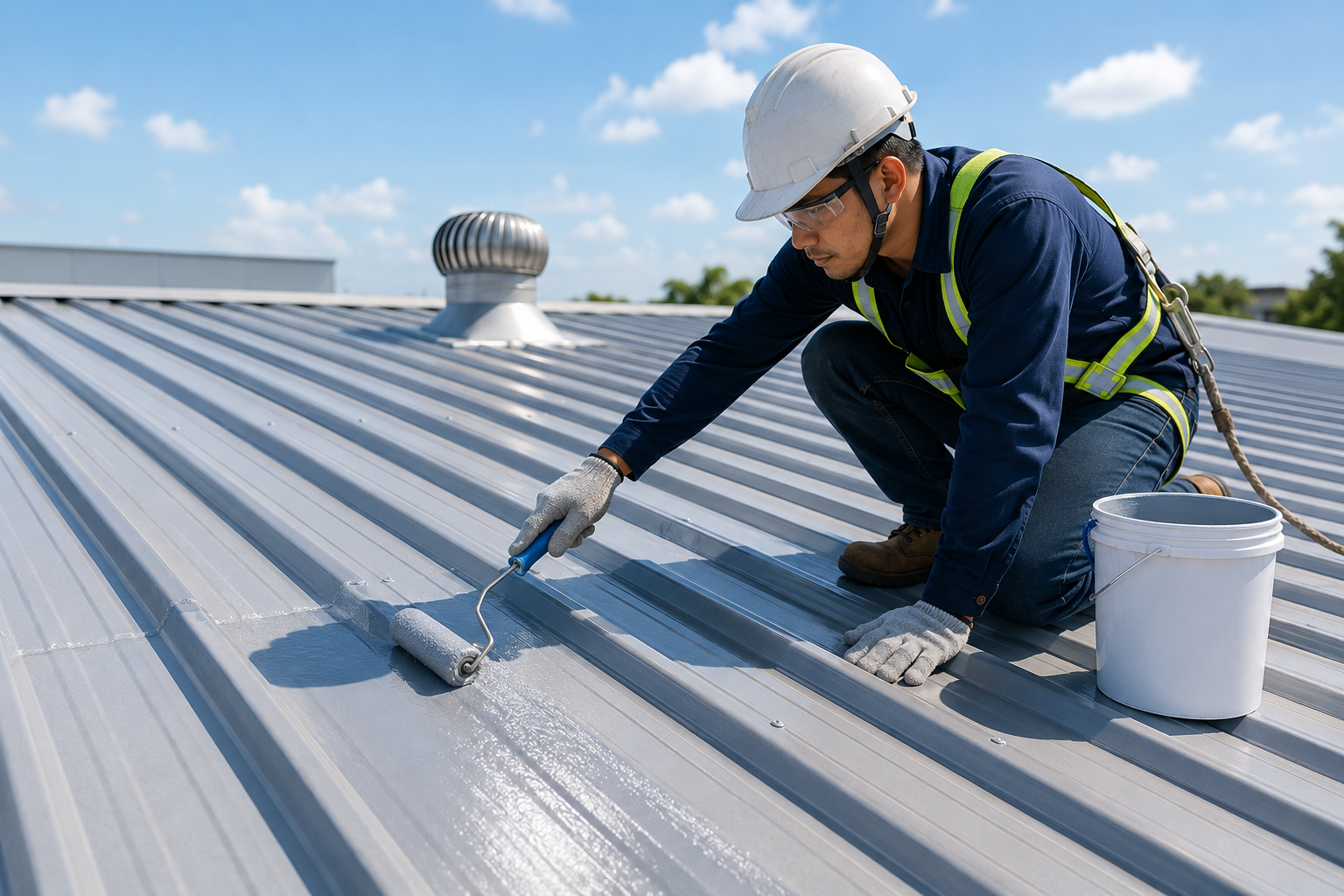
Step 5: Apply Roof Waterproof Coating
After repairing defects and preparing the surface, apply QL-Roofing Waterproof Coating where compatible to provide additional waterproofing and weather protection.
Which QingLong Products Can Be Used for Metal Roof Waterproofing?
Different roof defects require different treatments. There is no single product that should automatically be applied to every metal-roof problem.
Roofing Waterproof Coating
Suitable as the main roof waterproof coating where the roof substrate and application conditions meet the product requirements. It provides a weather-resistant waterproofing layer while also serving as a decorative roof coating.
QL-Waterproof Sealant
Designed for sealing joints and gaps against water ingress. For metal-roof maintenance, it may be used at compatible joints, gaps, and local details where sealing is required.
QL-Easy Tape
A convenient solution for sealing and reinforcing suitable joints and seams. It can be considered for vulnerable roof details where additional reinforcement is required as part of the waterproofing system.
QL-Fast Leakage Fix
Designed for quick-setting emergency leakage repairs. It should be selected according to the actual substrate and leakage condition rather than used as a replacement for a complete metal-roof waterproofing system.
Important: Product selection should always depend on the roof material, existing coating, substrate condition, defect type, and required waterproofing detail.
How Can You Extend the Lifespan of a Metal Roof?
Long-term roof durability depends on consistent maintenance rather than waiting until major leakage occurs. Inspect the roof periodically and pay particular attention to fasteners, seams, penetrations, flashing, drainage areas, and previous repair points.
Keep gutters and downpipes clear so rainwater can discharge properly. Standing water caused by poor drainage can increase stress on vulnerable roof areas. Treat scratches, damaged protective coatings, and early corrosion before they develop into more serious deterioration.
Sealant and waterproofing repairs should also be monitored over time. If an existing repair begins cracking, peeling, or separating from the substrate, investigate and rectify the cause rather than simply adding another layer over the failed material.
The original maintenance recommendations likewise emphasize periodic inspections, debris removal, rust prevention, fastener maintenance, sealant application, and regular gutter and downspout care.
Conclusion
With 30 years of waterproofing experience, QingLong Waterproofing provides reliable products and solutions to help protect metal roofs from leaks and deterioration.
From joints and fasteners to ageing coatings and recurring leaks, choosing the right waterproofing solution helps extend your roof’s service life. Contact QingLong Waterproofing for product recommendations, consultation, and project enquiries.
Frequently Asked Questions (FAQs)
1. Can waterproof coating stop a metal roof from leaking?
It can help when the coating is compatible with the roof and the actual defects are properly repaired. Loose fasteners, open joints, failed sealant, damaged flashing, and corrosion should not simply be covered without treatment.
2. What areas of a metal roof are most likely to leak?
Common leakage points include fasteners, panel seams, overlaps, flashing, roof edges, penetrations, and areas where existing sealant has deteriorated.
3. Can I apply waterproof coating directly over a rusty metal roof?
The roof condition should be assessed and properly prepared first. Loose rust, contamination, failed coatings, and severely corroded sections may require treatment or repair before waterproof coating is applied.
4. Can I waterproof only the leaking joint?
For an isolated defect, local repair may be possible. However, if several joints, fasteners, or roof sections are deteriorating, a broader waterproofing treatment may provide a more appropriate solution.
5. Which QingLong product is suitable for a metal roof?
Depending on the roof condition and application requirements, QL-Roofing Waterproof Coating can be considered for compatible roof surfaces, while QL-Waterproof Sealant and QL-Easy Tape may be used for suitable joints, gaps, and seam details.


