

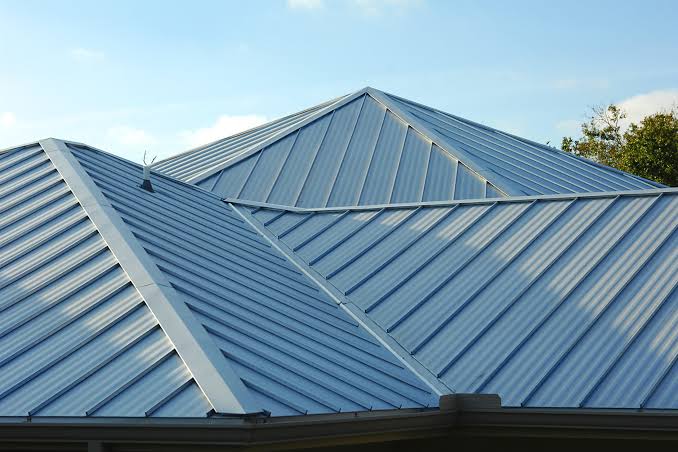
A brown patch on the ceiling after rain is often the first sign of a roof leak. Water can enter through a cracked tile, a loose metal roof fixing or a failed waterproofing layer, then travel along the roof structure before it drips indoors. The point where you see the stain can be some distance from where the water entered.
QingLong Waterproofing Malaysia helps homeowners, building managers and factory operators identify where water is entering and choose a repair based on the roof type and condition. Depending on the findings, the work may involve repairing a single junction, replacing damaged roofing components or renewing the waterproofing across a larger area.
What Are the Signs of a Roof Leak?
- Brown ceiling stains or damp wall patches that grow darker or larger after rain.
- Dripping water near ceilings, windows or wall junctions, sometimes only during wind-driven rain.
- Bubbling paint or peeling finishes where moisture has reached the ceiling or wall.
- Swollen ceiling boards, damp cabinets or damaged furniture beneath the affected area.
- Recurring mould or a musty smell in a room or ceiling void that stays damp.
Take photos of the affected area and note when it gets wet. A leak that appears only during wind-driven rain can give the inspection team a different starting point from one that shows up hours after water has pooled on a flat roof.
What Causes Roof Leaks?
Roof leaks often start where two materials meet or where something passes through the roof. Common entry points include roof-to-wall junctions, skylight flashings, vent pipes and metal sheet overlaps. Water can also enter through cracked tiles, worn screw washers, corroded sheets or damaged membranes.
Drainage can contribute to leaks as well. A blocked outlet can leave water standing on a concrete roof, where it can seep through defects in the waterproofing. On a pitched roof, debris in a valley or gutter can cause water to back up beneath the roof covering or overflow near the wall. If dampness appears during dry weather, the inspection can also consider condensation or plumbing as possible causes.
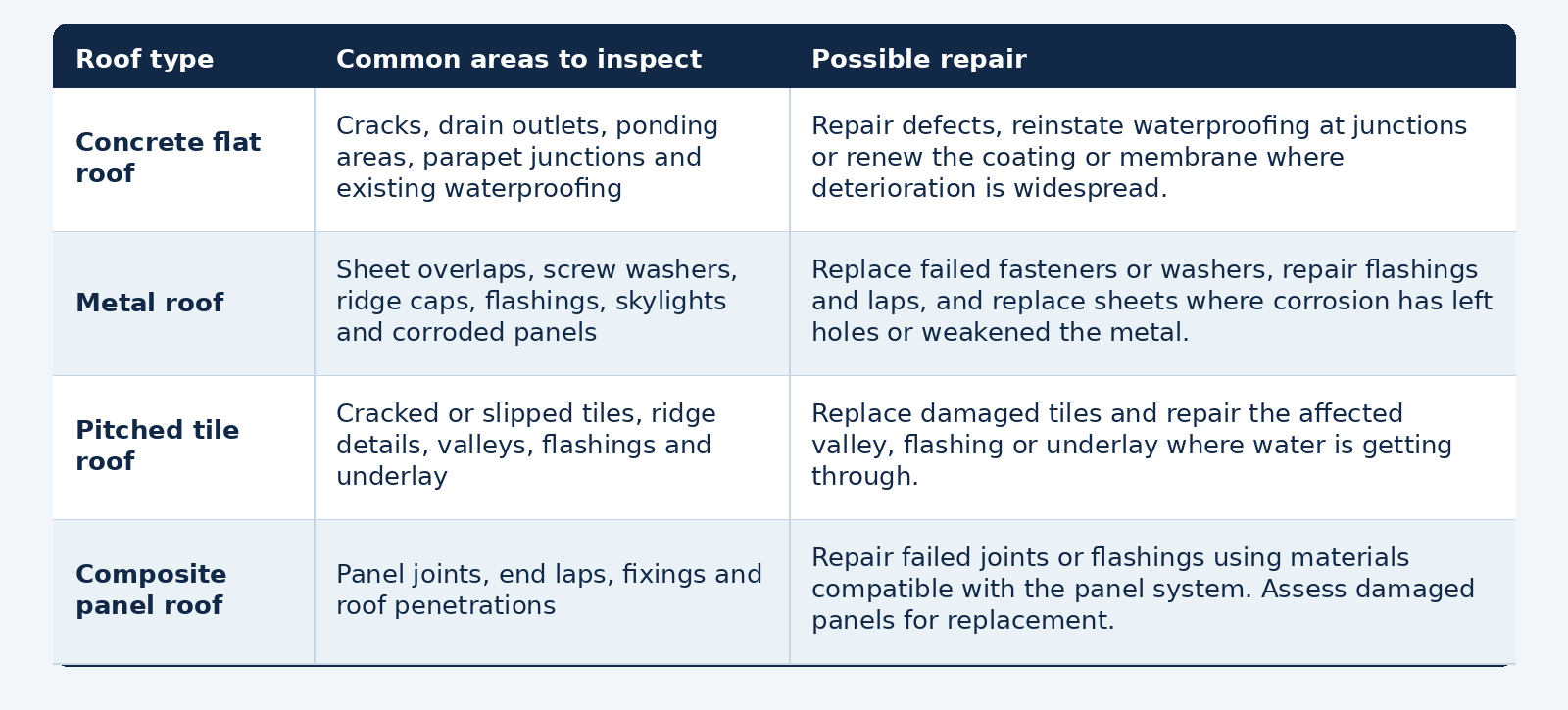
How QingLong Repairs Different Types of Roofs
When Is a Local Repair Enough?
A local repair may be suitable when the leak can be traced to an isolated defect and the surrounding roof is still in good condition. Examples include a slipped tile, a failed flashing around a vent or a small section of deteriorated waterproofing at a parapet.
A wider repair may be appropriate when a coating has lost adhesion across several areas, multiple roof details are leaking or previous patches keep failing. For factory roofs, it also helps to identify which areas sit above machinery, stock or active workspaces so the repair can be planned around site operations.
Conclusion
The right roof leak repair starts by tracing where water enters and checking the condition of the surrounding roof. Whether the problem is a failed metal roof fixing, a slipped tile or damaged concrete roof waterproofing, the inspection helps determine how much work is needed.
Need help with a leaking roof? WhatsApp QingLong Waterproofing Malaysia at 019-776 6971 to arrange an inspection. Share your project location, roof type if known, and photos of any visible stains or drips.
Frequently Asked Questions (FAQs)
1. How much does roof leak repair cost in Malaysia?
The cost depends on the roof type, access, the extent of damage and the repair materials. Replacing a few failed fasteners has a different scope from renewing a waterproofing system across a concrete roof. An inspection helps establish what the quotation needs to cover.
2. Can a roof leak be repaired from inside the house?
An indoor inspection can help trace where water has travelled. A lasting repair usually requires access to the point where water enters, such as a failed flashing, a damaged tile or a defect in the roof membrane.
3. What is the best sealant for a leaking roof?
The right sealant depends on the roof material, how much the joint moves and where it is exposed to water. A metal sheet overlap, a concrete crack and a skylight perimeter may each need a different treatment. Damaged components may need replacement before sealing the surrounding joint.
4. Can a concrete flat roof be waterproofed again?
Yes. The repair method depends on how well the existing waterproofing is bonded and whether there are cracks, trapped moisture or drainage issues. The inspection helps determine which areas can be repaired and where removal or renewal is needed.
5. Do I need to replace the entire roof if it leaks?
Localised leaks can often be repaired when the surrounding roof is sound. Partial or full replacement may be appropriate if there is widespread corrosion, extensive damage to the roof covering or repeated leaks across multiple areas.


