

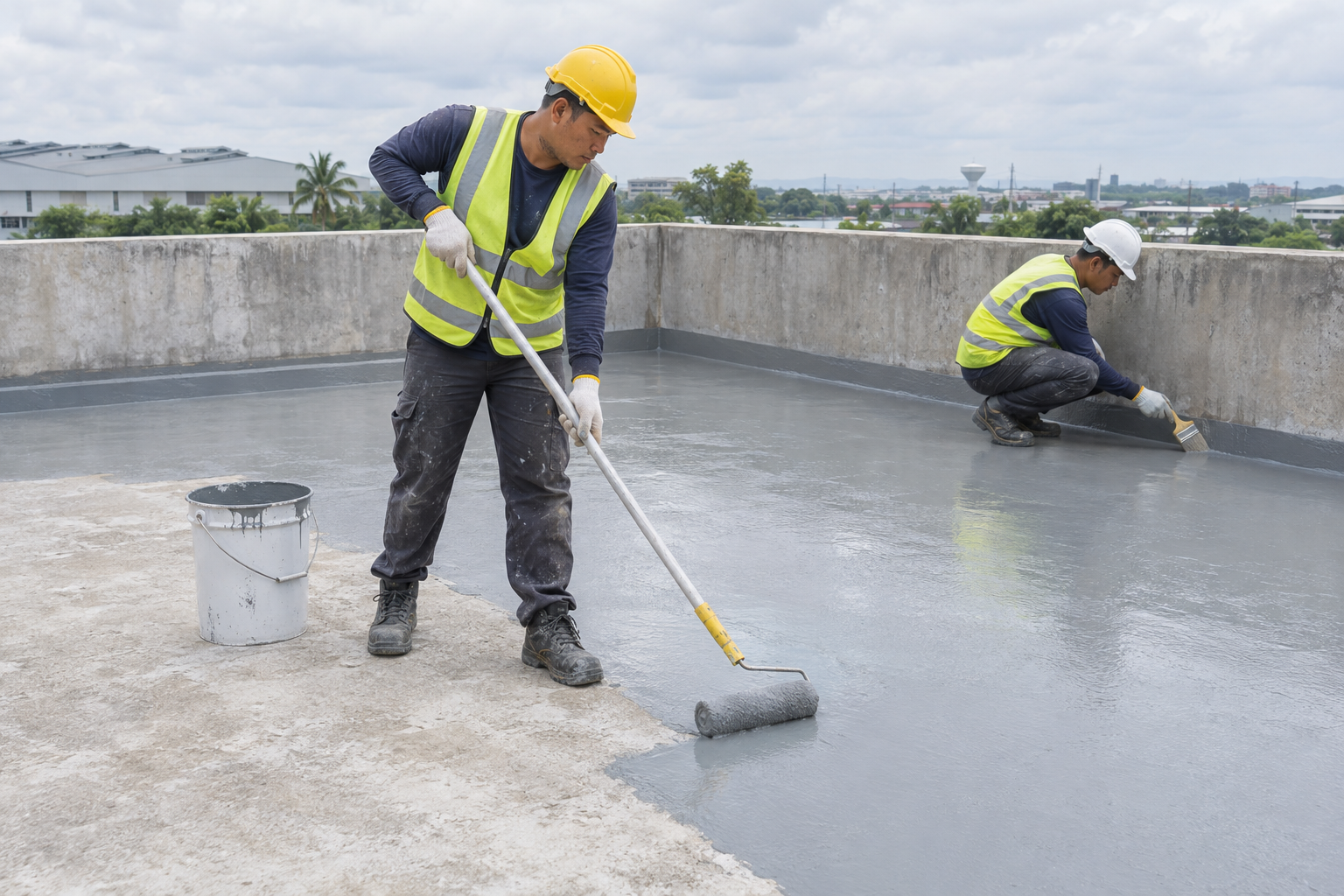
A waterproofing service helps identify where water enters a building and repair the affected area with a system suited to the surface. QingLong Waterproofing works with homeowners, property managers and contractors in Malaysia on leaks affecting roofs, balconies, toilets and other areas exposed to water.
If a ceiling stain grows after rain, tiles stay damp near a balcony door or water drips below an upstairs bathroom, note when it happens and take photos. Those details help the inspection team decide which areas to check first and whether the symptoms point to waterproofing, drainage or plumbing.
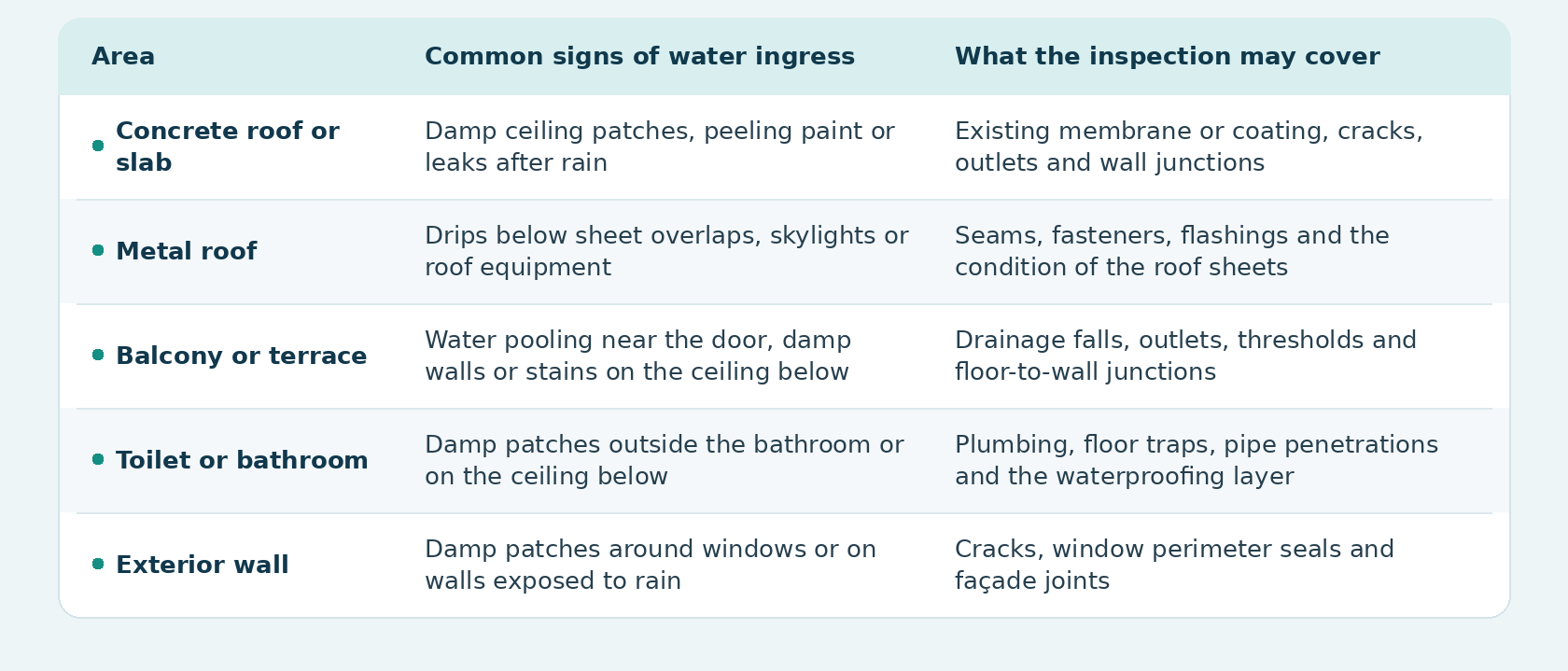
Which Areas Need Waterproofing?
What Does a Waterproofing Service Include?
1. Inspect the Leak and Trace the Likely Source
The first step is to match the visible symptoms with the conditions that trigger them. A ceiling stain below a bathroom that appears after shower use calls for different checks from one that appears after rain. Water can also travel along a slab or beneath a finish before showing up indoors, so an inspection may extend beyond the stained area.
Depending on the property, the team may need access to both the affected room and the surface above or beside it. Photos showing how the patch changes after rain or after the bathroom is used can help narrow down the source.
2. Define the Repair Scope and Select the System
An isolated defect with surrounding waterproofing in sound condition may be suitable for a local repair. Recurring leaks in several locations, widespread peeling or deterioration across an older roof may call for work over a larger area.
The system also depends on the surface and how it is used. An exposed concrete roof needs a system suitable for outdoor exposure. A tiled wet area needs a waterproofing system compatible with the floor finish and drain details. For a metal roof, the repair scope may focus on sheet overlaps, fasteners and flashings before any broader coating work is considered.
3. Prepare the Surface and Treat the Details
Surface preparation can include removing loose material, cleaning the substrate, repairing suitable cracks and checking existing layers for adhesion. On a balcony, the drain outlet and door threshold need attention alongside the main floor. On a flat roof, the same applies to parapet junctions and penetrations around pipes or equipment.
If a surface regularly holds standing water, the repair scope should also address why it collects there. Clearing a blocked outlet, for example, is a different task from correcting a low spot where water remains even when the outlet is clear.
4. Check the Completed Work
The appropriate checks depend on the area and the waterproofing system. Where suitable, a controlled water test can help check a wet area or balcony after the system has cured. Before handover, confirm when the area can reopen to foot traffic, when finishing work can resume and what maintenance the system requires.
What Affects the Cost of Waterproofing?
The price depends on the repair area, the condition of the surface and the work required to reach it. A small balcony with tiles that need to be removed and reinstated may involve more work than a larger, accessible roof area with a sound substrate.
When reviewing a quotation, check whether it covers access, removal of damaged finishes, substrate repairs, treatment around drains and junctions, testing where applicable and reinstatement. For occupied homes and operating buildings, ask how long the affected area will be out of use. This can help you plan around a bathroom closure, balcony access restriction or scheduled work at a commercial property.
Conclusion
The right waterproofing repair starts with identifying where water enters and checking how far the damage extends. That gives you a basis for choosing a local repair or a wider waterproofing system and comparing quotations for the same scope of work.
Need a waterproofing service in Malaysia? WhatsApp QingLong Waterproofing at 019-776 6971 with your property location and photos of the affected area to discuss an inspection.
Frequently Asked Questions (FAQs)
1. Can waterproofing be done without removing tiles?
Sometimes. A surface treatment may be suitable if inspection confirms that the tiles are sound and the leak is linked to an accessible surface defect. If the waterproofing layer beneath the tiles needs replacing, or if the drain connection needs repair, some tile removal may be necessary.
2. How long does waterproofing work take?
Timing depends on the repair area, preparation required, number of applications and curing time. For outdoor work, surface conditions can also affect the schedule. Ask for the expected work duration and the date the area can return to normal use.
3. Can I repair only the leaking part of my roof?
A local repair can make sense when the defect can be traced to one detail, such as a damaged flashing or a leaking fastener, and the surrounding roof remains in sound condition. An inspection helps determine whether a wider repair is needed.
4. Is my ceiling leak caused by waterproofing or plumbing?
Both are possible. Note whether the leak appears during rainfall, after using a shower or basin, or even when the area has been dry and unused. The timing helps guide checks of the roof, waterproofing layer, supply pipes and drainage connections.
5. What should I send when requesting a waterproofing quotation?
Share the property location, the affected area, photos of the visible damage and when the leak occurs. Include any previous repair work and, if available, photos of the roof, balcony or room above the leak.


