

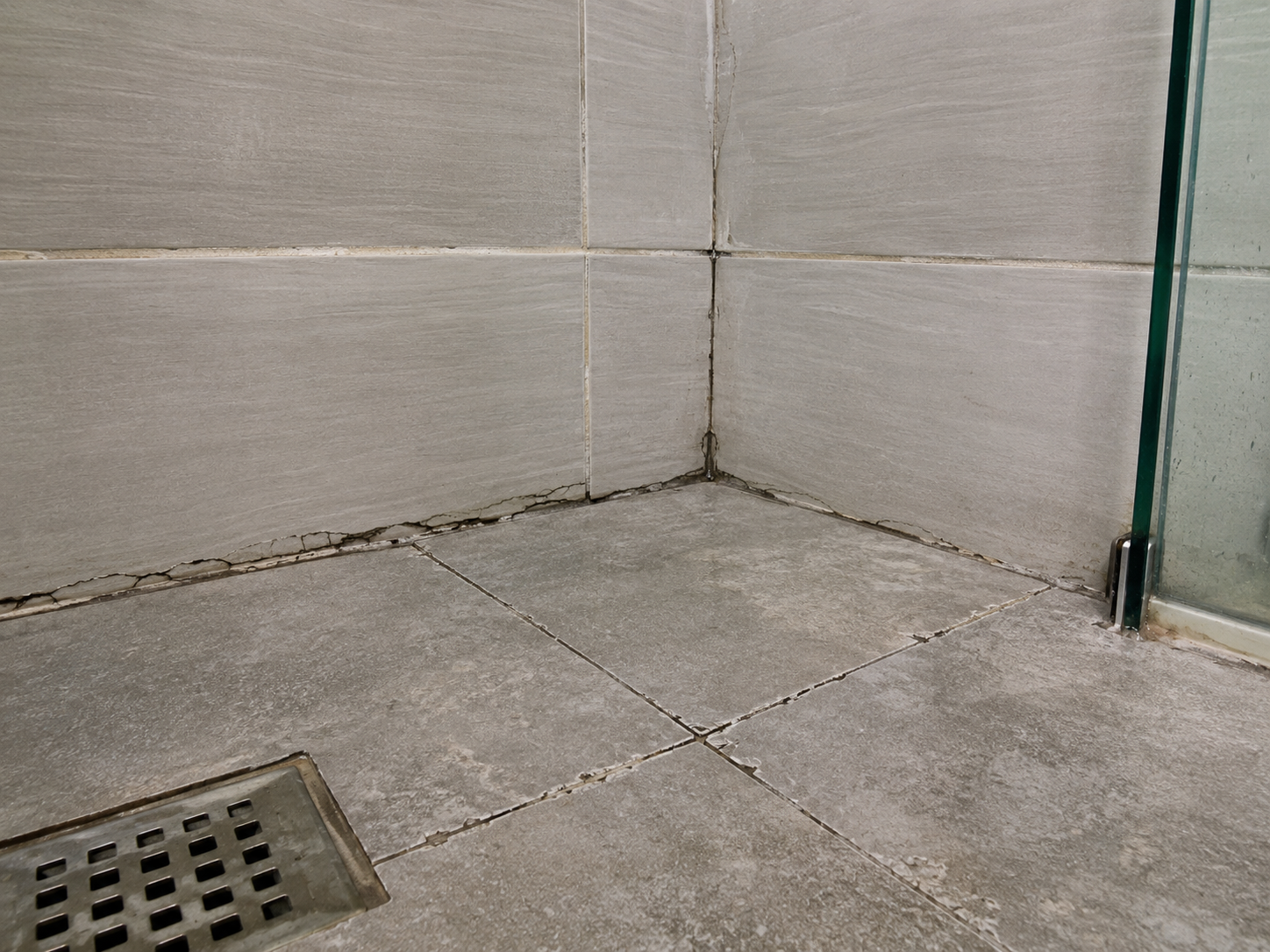
Tiny cracks in your shower grout might not seem like a big deal at first, but they can quickly become one of the most expensive bathroom problems if ignored. Grout cracking is caused by structural movement, poor installation, or underlying moisture. It also includes using low-quality grout instead of flexible sealant in corners, excessive water in the mix, or failing to waterproof behind the tiles.
For many Malaysia homeowners, cracked grout is one of the earliest warning signs that a shower needs professional attention. The longer the issue is left untreated, the greater the chance of costly repairs later on. QingLong Waterproofing helps with leaking showers, restores damaged grout, and provides long-lasting waterproofing for bathroom tiles tailored to your needs.
What Causes Shower Grout to Crack?
Shower grout is exposed to water, steam, heat, cleaning products and daily movement every time the bathroom is used. Over time, these factors can weaken grout and cause it to crack, crumble or deteriorate.
Natural Wear and Tear
Bathrooms are among the most frequently used areas in a home. Years of daily showers and regular cleaning can gradually weaken grout lines, particularly in older bathrooms.
As grout ages, it may develop small cracks, become loose or crumbly, absorb more moisture, and develop mould, mildew or discolouration. This can be particularly noticeable in older terrace houses, semi-detached homes, condominiums and other properties where the bathroom has been exposed to moisture for many years.
Malaysia's consistently warm and humid climate can also create favourable conditions for mould and mildew when moisture remains trapped around damaged grout.
Poor Installation
Incorrect installation is another common reason for cracked shower grout. Problems can occur when low-quality grout is used, too much water is added to the grout mixture, the grout is mixed incorrectly or the tile surface is not properly prepared before application.
Another common issue is using grout in corners or joints where a suitable flexible sealant should be used instead. These areas can experience movement, and rigid grout may crack when the surfaces expand, contract or move slightly.
Inadequate waterproofing behind the tiles can also turn a relatively small grout problem into a more serious shower leakage issue. Poor workmanship can significantly shorten the service life of a bathroom waterproofing system.
Structural Movement
Buildings naturally experience small amounts of movement over time. Even minor movement can place stress on rigid grout joints and cause them to crack.
This may be more noticeable in older Malaysian homes, multi-storey properties, bathrooms with movement or settlement issues, and areas exposed to regular temperature changes. If the same grout cracks repeatedly after being repaired, simply applying new grout may not solve the underlying problem. The movement or moisture issue should be assessed first.
Why Cracked Grout Should Never Be Ignored
Cracked grout is not simply a cosmetic problem. Although grout itself is not the primary waterproofing layer of a properly constructed shower, damaged joints can provide easier pathways for water to reach areas behind the tiles, especially when the underlying waterproofing system is already compromised.
If moisture continues to penetrate the shower area, it can contribute to mould and mildew growth, damp walls and floors, deterioration of plasterboard or other wall materials, loose or hollow tiles, damaged bathroom surfaces and waterproofing failure. In more serious cases, prolonged moisture exposure can result in a much more expensive bathroom repair.
This is why small grout cracks should not automatically be treated as a simple cosmetic issue. If you notice recurring cracks, water stains, dampness or signs of a leaking shower, it is better to have the area inspected before the problem becomes more difficult and expensive to repair.
Can Cracked Grout Cause a Leaking Shower?
Yes, cracked grout can contribute to shower water leakage, but it is not always the only cause. A leaking shower can result from several different problems, including damaged grout or sealant, failed waterproofing, movement joints, pipe penetrations, floor waste issues or problems around shower corners.
When grout begins to crack or deteriorate, water may find its way through gaps around the tiled surface. If the waterproofing membrane underneath is damaged, missing or improperly installed, moisture can potentially reach the underlying structure.
This is why replacing the visible grout alone may not always provide a permanent solution. A professional inspection can help determine whether the problem is limited to the grout and sealant or whether there is a deeper waterproofing issue.
The Importance of Professional Shower Grout Repair Malaysia Services
If you want your shower tiles to remain protected against structural movement and moisture, proper grout repair and waterproofing are important. Cracked or deteriorated grout may look like a minor cosmetic issue, but if the underlying cause is not addressed, water can potentially seep into areas behind the tiles and contribute to further bathroom damage.
DIY grout repair kits may seem convenient when the damage appears small. However, shower repairs require more than simply applying new grout over an existing crack. The condition of the grout, tile joints, sealant and waterproofing system should be properly assessed to determine the right repair approach.
This is where QingLong Waterproofing can help. Our professional waterproofing solutions are designed to address bathroom water seepage and tile-related moisture problems based on the actual condition of the affected area.
Risks of DIY Shower Grout Repairs
DIY repairs may provide a quick cosmetic improvement, but they may not address the underlying cause of the cracked grout. If the wrong material is used or the damaged grout is not properly removed and prepared, the problem may return.
Poorly carried out repairs can result in uneven grout lines, weak adhesion, continued water seepage, damaged tile edges and recurring leaks. In some cases, simply covering the visible crack may only provide a temporary solution while moisture continues to affect the area behind the tiles.
Why Professional Shower Grout Repair Matters
Professional shower grout repair involves more than making the grout look new again. At QingLong Waterproofing, the repair approach can be tailored to the condition of the shower area. This may include assessing potential water entry points, removing deteriorated grout, repairing affected joints and applying suitable waterproofing solutions where necessary.
With the right repair method and materials, professional shower grout repair can help restore the appearance of your bathroom while addressing potential moisture and leakage concerns. This can also be a more practical option for homeowners who want to repair their shower without immediately removing all the existing tiles.
Conclusion
Small cracks in shower grout should not be ignored. If left untreated, they may allow water to seep into gaps around the tiles and contribute to moisture damage over time. For homeowners looking to restore their bathroom or shower without removing tiles or creating excessive mess, professional shower grout repair can be a practical solution.
QingLong Waterproofing provides professional cracked shower grout repair and waterproofing solutions designed to help restore damaged shower areas, improve moisture protection and reduce the risk of more costly repairs in the future.
Contact QingLong Waterproofing today to have your shower assessed and address minor grout damage before it develops into a bigger bathroom problem.
Frequently Asked Questions (FAQs)
1. Can cracked shower grout cause a leaking shower?
Yes, cracked or deteriorated grout can contribute to water seepage around the shower area. However, grout is not the only possible cause of a leaking shower. Failed sealant, damaged waterproofing, movement joints, pipe penetrations and other bathroom defects can also allow water to escape. A proper inspection can help identify the actual source of the problem.
2. Do I need to remove my tiles to repair cracked shower grout?
Not always. If the tiles are still firmly bonded and the damage is mainly limited to the grout and joints, repair may be possible without removing the tiles. The suitable repair method depends on the condition of the existing grout, tiles, joints and waterproofing system.
3. Can I repair cracked shower grout myself?
DIY grout repair may be suitable for minor cosmetic damage, but it may not address the reason why the grout cracked in the first place. If the grout continues to crack, water is seeping outside the shower or there are signs of moisture damage, professional assessment is recommended.
4. Why does my shower grout keep cracking after repair?
Recurring cracks can be caused by structural movement, movement between different materials, unsuitable grout or sealant, poor surface preparation, moisture problems or an underlying waterproofing issue. Simply applying new grout over the existing crack may therefore only provide a temporary repair.
5. Does QingLong Waterproofing provide shower grout repair in Malaysia?
Yes. QingLong Waterproofing provides waterproofing solutions for bathroom and shower areas. The appropriate repair method depends on the condition of the affected area, so an assessment is recommended before deciding whether grout repair, sealant replacement or a more extensive waterproofing solution is required.


