

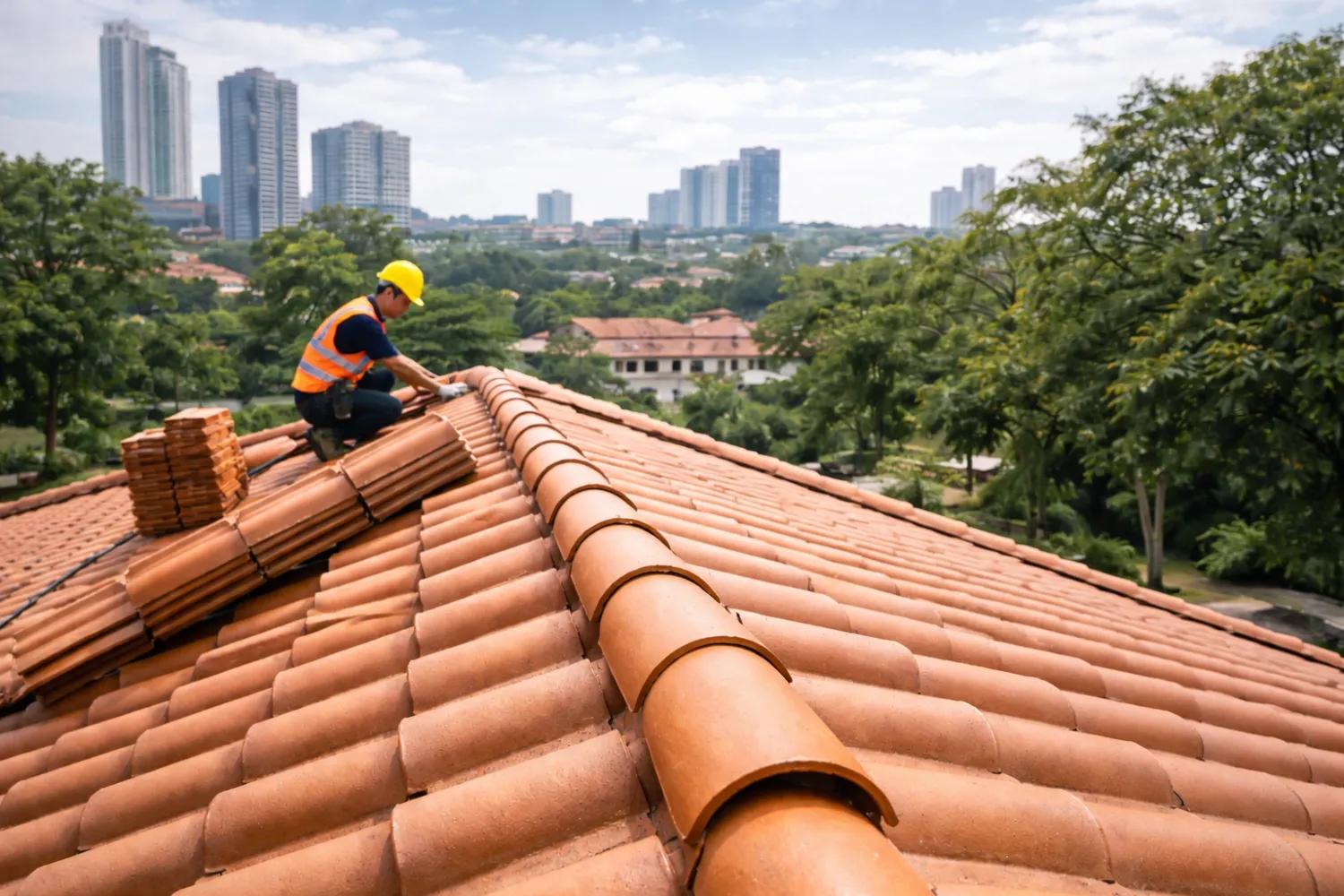
A leaking tile roof can allow rainwater to penetrate beneath the roofing system, potentially damaging ceiling boards, roof structures, insulation and interior finishes. Common causes include cracked roof tiles, displaced tiles, deteriorated ridge mortar, damaged flashing and defective roof junctions.
QingLong Waterproofing Malaysia provides professional waterproofing services and practical roof leakage solutions for residential and selected commercial properties. With over 30 years of experience in the waterproofing industry, we focus on identifying the actual source of water penetration before recommending suitable repair methods and waterproofing materials.
Whether you are experiencing roof leakage after heavy rainfall, water stains on your ceiling or recurring dampness beneath tiled roofing, the correct repair approach starts with understanding the condition of the entire roofing system.
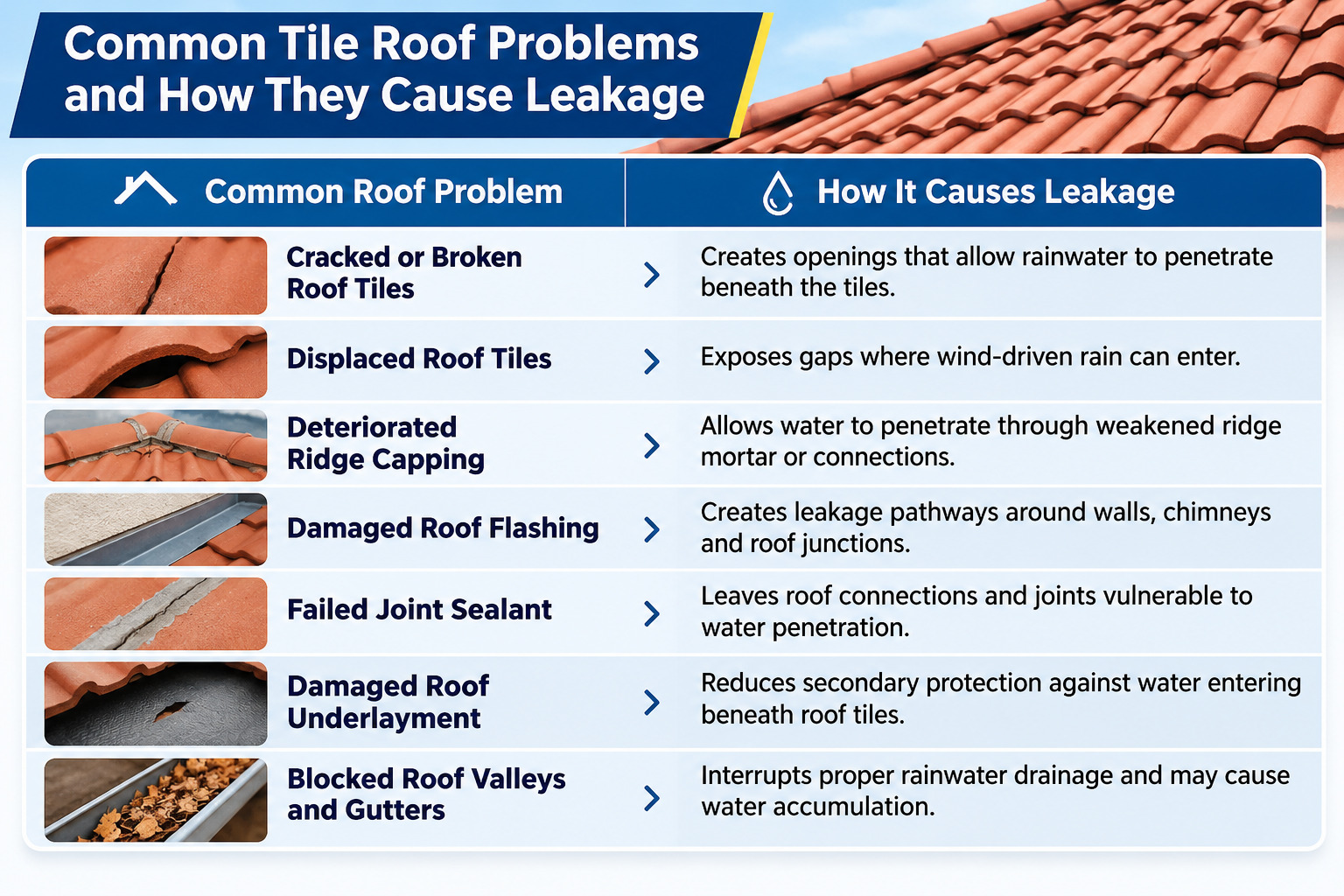
Common Causes of Tile Roof Leakage in Malaysia
Malaysia's tropical climate exposes roof tiles to frequent rainfall, high humidity, strong sunlight and temperature changes. Over time, these environmental conditions, together with natural material deterioration and roof movement, can affect the performance of tiled roofing systems.
A leaking tile roof does not necessarily mean the entire roof requires waterproofing. Water may enter through individual defects or vulnerable roof connections.
Identifying the actual leakage source is essential. Applying waterproofing coating without repairing defective roof components may only provide temporary surface protection while the underlying problem remains unresolved.
Professional Tile Roof Waterproofing and Repair Solutions
QingLong recommends suitable tile roof waterproofing methods based on roof construction, tile material, surface condition and the extent of water penetration.
Not every leaking roof requires the same treatment. Some problems can be resolved through localised repairs, while others may require additional waterproofing protection.
1. Tile Roof Inspection and Leakage Detection
The first step is to assess the condition of the tiled roofing system and identify potential water entry points.
Our assessment focuses on:
Cracked, broken or displaced roof tiles.
Loose or deteriorated ridge capping.
Damaged flashing around roof junctions.
Defective joints and connections.
Signs of water penetration beneath the roof.
Visible deterioration of existing waterproofing materials.
A proper inspection helps determine whether targeted roof repairs, tile replacement or additional waterproofing treatment is appropriate.
2. Roof Tile Crack Repair and Replacement
Cracked or broken roof tiles can create direct pathways for rainwater to enter the roofing structure.
Depending on the severity of the damage, suitable repair methods may include:
- Replacing severely damaged roof tiles.
- Repairing compatible minor cracks where appropriate.
- Restoring defective tile connections.
- Checking surrounding tiles for displacement or deterioration.
Replacing severely damaged tiles is generally more appropriate than simply covering them with waterproofing sealant.
3. Tile Roof Waterproofing Coating Application
Waterproofing coatings may provide additional surface protection for selected existing roof tile surfaces, provided the substrate and product specifications are compatible.
Before application, important considerations include:
- Roof tile material and surface condition.
- Existing coating adhesion and compatibility.
- Surface cleanliness and preparation.
- Roof slope and drainage conditions.
- Product suitability for outdoor weather exposure.
A properly selected coating can help reduce surface water penetration and provide additional protection against weather exposure.
However, waterproofing coating should not be treated as a universal solution for every tile roof. Cracked tiles, defective flashing, failed underlayment and structural roofing problems must be addressed separately where necessary.
4. Ridge Capping, Roof Valley and Flashing Waterproofing
Roof ridges, valleys and flashing connections are particularly important because they direct rainwater across different sections of the roofing system.
Common vulnerable areas include:
Ridge and hip connections
Deteriorated ridge mortar or loose ridge components may allow water to enter through roof intersections.
Roof valleys
Accumulated debris, damaged valley flashing or defective connections can interfere with proper rainwater drainage.
Wall and roof junctions
Flashing defects and poorly sealed connections may allow water to penetrate where tiled roofing meets vertical walls.
Repairing these details helps restore the roof's ability to manage rainwater and reduces the risk of recurring leakage.
How to Choose the Right Tile Roof Waterproofing Method
Different roofing problems require different repair methods. Selecting the correct treatment helps avoid unnecessary coating work and addresses the actual source of leakage.
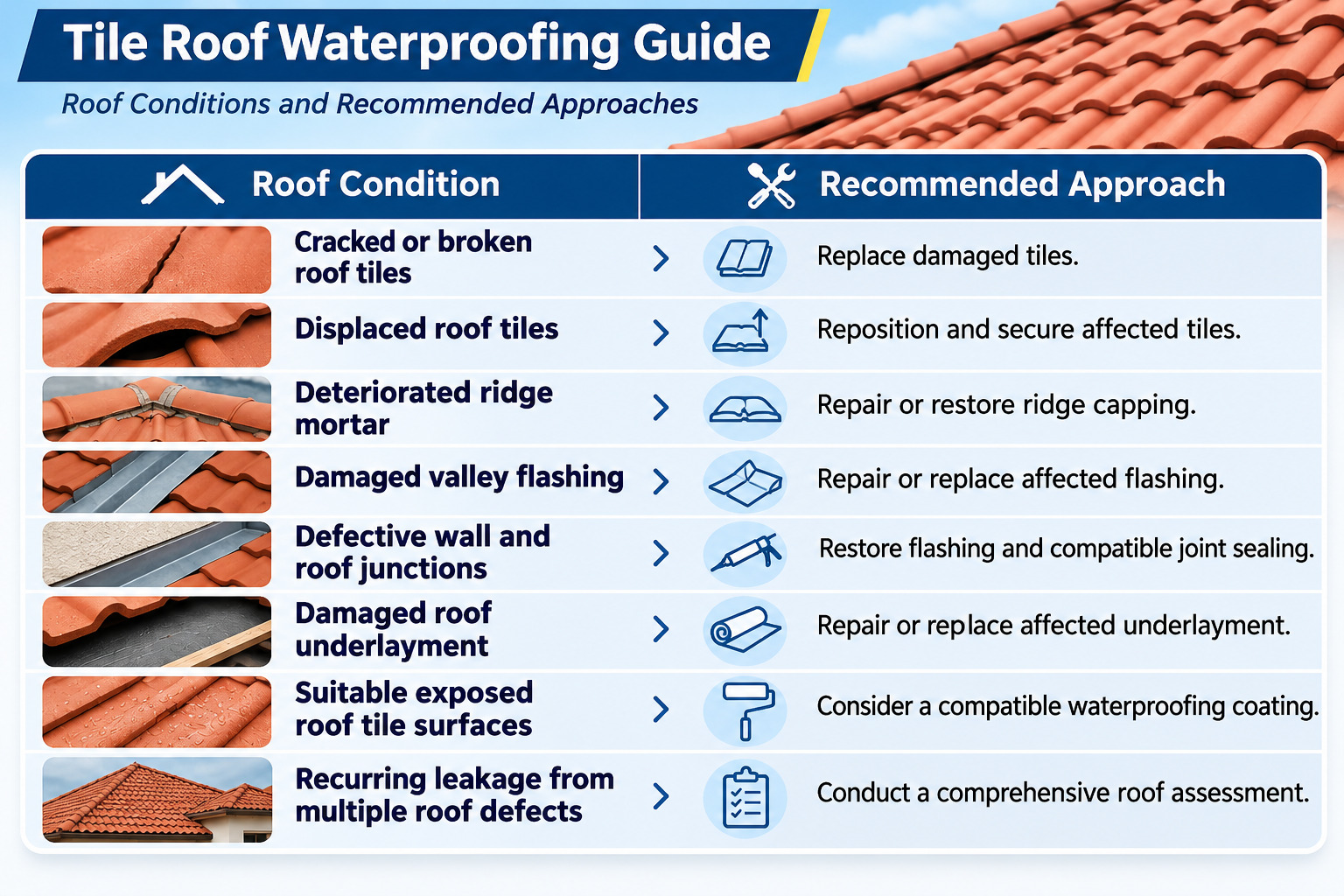
Important: The most suitable waterproofing method depends on the actual roof condition. Surface coating alone cannot correct every underlying roofing defect.
Our Tile Roof Waterproofing Service Process
A systematic repair process helps ensure that the selected waterproofing treatment addresses the identified leakage problem.
Step 1: Roof Condition Assessment
Inspect accessible roof tiles, ridge sections, flashing, roof valleys and visible leakage points to identify potential water entry pathways.
Step 2: Surface Preparation
Remove dirt, loose materials and deteriorated coatings where necessary. Ensure the repair area is properly prepared according to the selected material requirements.
Step 3: Waterproofing and Roof Repairs
Replace damaged tiles, repair defective joints, restore vulnerable roof details and apply compatible waterproofing materials to suitable surfaces.
Step 4: Final Inspection
Review repaired sections, roof junctions and application quality. Identify any visible remaining defects and provide appropriate maintenance recommendations.
Why Choose QingLong Waterproofing Malaysia?
Choosing a suitable waterproofing contractor involves more than comparing material prices. Understanding roof construction, identifying leakage sources and selecting compatible waterproofing systems are equally important.
QingLong Waterproofing brings over 30 years of waterproofing industry experience, supported by waterproofing material knowledge and practical application experience.
Our approach focuses on:
1. More Than 30 Years of Waterproofing Industry Experience
Our industry experience supports practical understanding of different waterproofing materials, building substrates and water leakage conditions.
2. Leakage Source Identification
We focus on identifying potential water entry points before recommending repair or waterproofing work, helping property owners avoid unnecessary treatments.
3. Suitable Waterproofing Material Selection
Different roof surfaces require different waterproofing materials. Product selection considers substrate compatibility, application conditions and exposure requirements.
4. Practical Repair Recommendations
We consider whether the roof requires localised tile replacement, joint restoration, flashing repair or additional waterproofing protection.
5. Waterproofing Products and Professional Services
QingLong provides waterproofing materials and professional waterproofing solutions for residential, commercial and industrial applications.
Tile Roof Waterproofing Services for Malaysian Properties
Roof leakage can affect different types of properties, from individual residential houses to larger buildings with tiled roofing sections.
QingLong provides waterproofing solutions for property owners and building-related projects, subject to site assessment and service availability.
Our waterproofing service network includes selected locations in:
Johor Bahru and surrounding Johor areas.
Kuala Lumpur and Petaling Jaya.
Subang and surrounding Selangor areas.
Central Melaka.
Kota Kinabalu.
Kuching.
For properties outside these areas, contact our team to confirm service availability.
Whether the issue involves a leaking residential roof, deteriorated roof connections or recurring water penetration, a proper assessment helps determine the appropriate repair scope.
Contact QingLong for Professional Tile Roof Waterproofing in Malaysia
A leaking tile roof should be assessed according to its actual condition rather than treated with a one-size-fits-all waterproofing solution.
QingLong Waterproofing Malaysia provides professional waterproofing services, leakage assessment and suitable repair recommendations to help property owners address roof water penetration.
Whether you are dealing with cracked roof tiles, leaking ridge connections, damaged flashing or recurring roof leakage after heavy rain, our team can help assess your requirements.
Speak to QingLong Waterproofing today to discuss your tile roof leakage problem and arrange a suitable inspection.
WhatsApp: 013-7788805
Website: QingLong Waterproofing Malaysia
Service: Residential, commercial and industrial waterproofing solutions
Frequently Asked Questions (FAQs)
1. What is the best waterproofing method for tile roofs?
There is no single waterproofing method suitable for every tiled roof. The appropriate solution depends on roof tile material, roof condition and the source of water penetration. Damaged tiles, ridge connections and flashing defects should be repaired before considering additional waterproofing coating.
2. Can waterproofing coating stop tile roof leakage?
Compatible waterproofing coatings may help reduce surface water penetration on suitable roof tiles. However, coating cannot replace broken tiles, repair damaged flashing or restore failed roof underlayment. The underlying roofing defects should be addressed first.
3. Do I need to replace my entire tile roof if it leaks?
Not necessarily. Localised leakage may be resolved through individual tile replacement, ridge repairs or flashing restoration. However, extensive deterioration or widespread damage may require more comprehensive roofing work.
4. How much does tile roof waterproofing cost in Malaysia?
The cost depends on several factors, including:
Total roof area.
Roof height and accessibility.
Type and condition of roof tiles.
Number of damaged sections.
Required repair methods.
Waterproofing materials and labour.
A site assessment is recommended before providing an accurate quotation.
5. How long does tile roof waterproofing last?
The service life depends on the waterproofing system, material quality, substrate condition, surface preparation, application quality and exposure to weather conditions. Regular roof inspections and maintenance can help identify deterioration at an early stage.
6. Can waterproofing be applied to existing roof tiles?
Yes. Certain existing roof tile surfaces can receive compatible waterproofing treatments. However, the tile material, surface condition, existing coatings and product specifications must be assessed before application.
7. What are the early signs of a leaking tile roof?
Common warning signs include:
Water stains appearing on ceiling boards.
Damp patches around roof and wall connections.
Dripping water during heavy rainfall.
Mould or moisture-related deterioration in roof spaces.
Visible cracked or displaced roof tiles.
These signs indicate that further roof inspection may be necessary.
8. Should I repair a tile roof leak immediately?
Yes. Addressing roof leakage early can help reduce the risk of further damage to ceiling boards, timber components, insulation and interior finishes. If water is near electrical fittings, avoid touching affected areas and arrange a qualified inspection.


