

A leaking toilet can cause more than just wet bathroom floors. Water seepage beneath tiles, through concrete slabs and around pipe connections can gradually damage surrounding walls, ceilings and building structures.
If left untreated, bathroom leakage may lead to persistent dampness, peeling paint, ceiling stains and deterioration of adjacent finishes.
QingLong Waterproofing provides professional toilet waterproofing solutions in Malaysia for residential, commercial and industrial properties. With over 30 years of waterproofing industry experience, we help property owners identify potential leakage sources and select suitable waterproofing materials and repair methods.
Whether you are experiencing toilet floor leakage, damp bathroom walls or water stains on the ceiling below, identifying the actual cause is the first step towards an effective repair.
Professional Toilet Waterproofing Services in Malaysia
As an experienced waterproofing company, QingLong understands that bathroom leakage does not always originate from a failed waterproofing membrane.
Water may escape through deteriorated grout, damaged pipe connections, defective floor traps, cracks in concrete or poorly sealed wall-to-floor junctions.
Our toilet waterproofing services focus on identifying the affected areas and recommending suitable solutions according to the existing bathroom condition.
Our services include:
1. Toilet Leakage Inspection
Inspect affected bathroom areas to identify possible water entry points and leakage pathways. Assessment may cover floor surfaces, wall junctions, floor traps, pipe penetrations and surrounding areas showing moisture damage.
2. Bathroom Floor Waterproofing
Apply suitable waterproofing systems to protect bathroom floors and underlying substrates against water penetration. The appropriate system depends on whether the bathroom is newly constructed, undergoing renovation or experiencing existing leakage.
3. Wall and Floor Joint Waterproofing
Treat vulnerable junctions between bathroom walls and floors, where movement, cracks or deteriorated sealing can allow water to penetrate.
4. Toilet Waterproofing Repair
Repair identified waterproofing defects using compatible materials and suitable application methods. Depending on the severity of the problem, repairs may involve surface treatment, joint sealing or replacement of the existing waterproofing layer.
5. Shower Area Waterproofing
Protect shower floors, wall corners and drainage connections against repeated water exposure. Proper detailing is particularly important in shower areas because these surfaces experience frequent and prolonged contact with water.
Common Signs Your Toilet Needs Waterproofing Repair
Bathroom waterproofing defects are not always immediately visible. In many cases, water travels beneath tiles or through concrete before appearing in another part of the building.
Look out for these common warning signs.
1. Water Stains on the Ceiling Below the Toilet
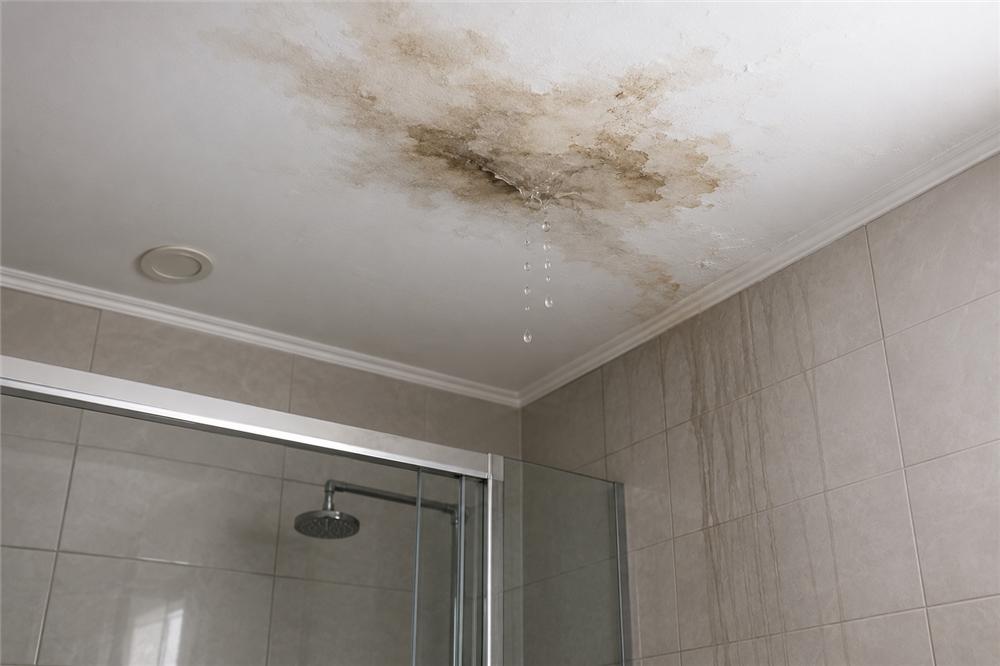
Yellowish or brownish ceiling stains beneath an upstairs bathroom may indicate water seepage from the floor above.
Possible causes include:
Deteriorated waterproofing membranes.
Leaking concealed water supply or drainage pipes.
Defective floor trap connections.
Water penetration through cracks or floor junctions.
The ceiling stain indicates where moisture has appeared, not necessarily where the leakage originates.
2. Damp Walls Outside the Bathroom
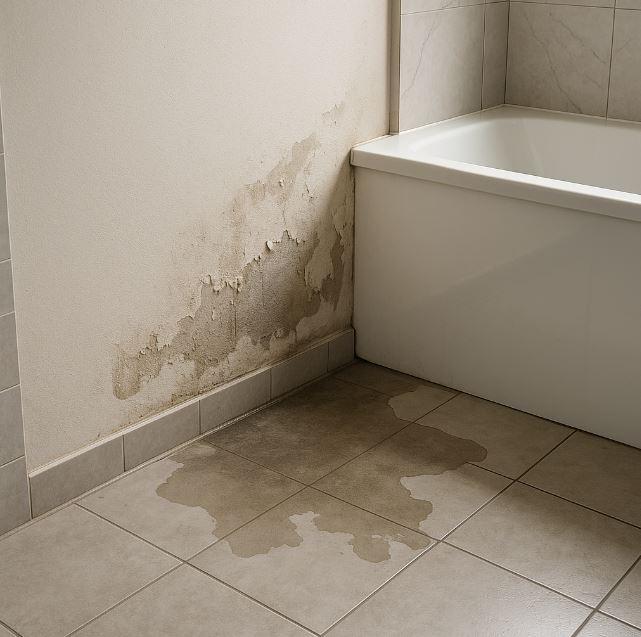
ersistent damp patches, bubbling paint or peeling wall finishes near a bathroom may indicate moisture migration through adjoining walls.
Pay particular attention to walls shared with shower areas, bathroom floors and concealed plumbing installations.
3. Cracked Tiles and Deteriorated Grout
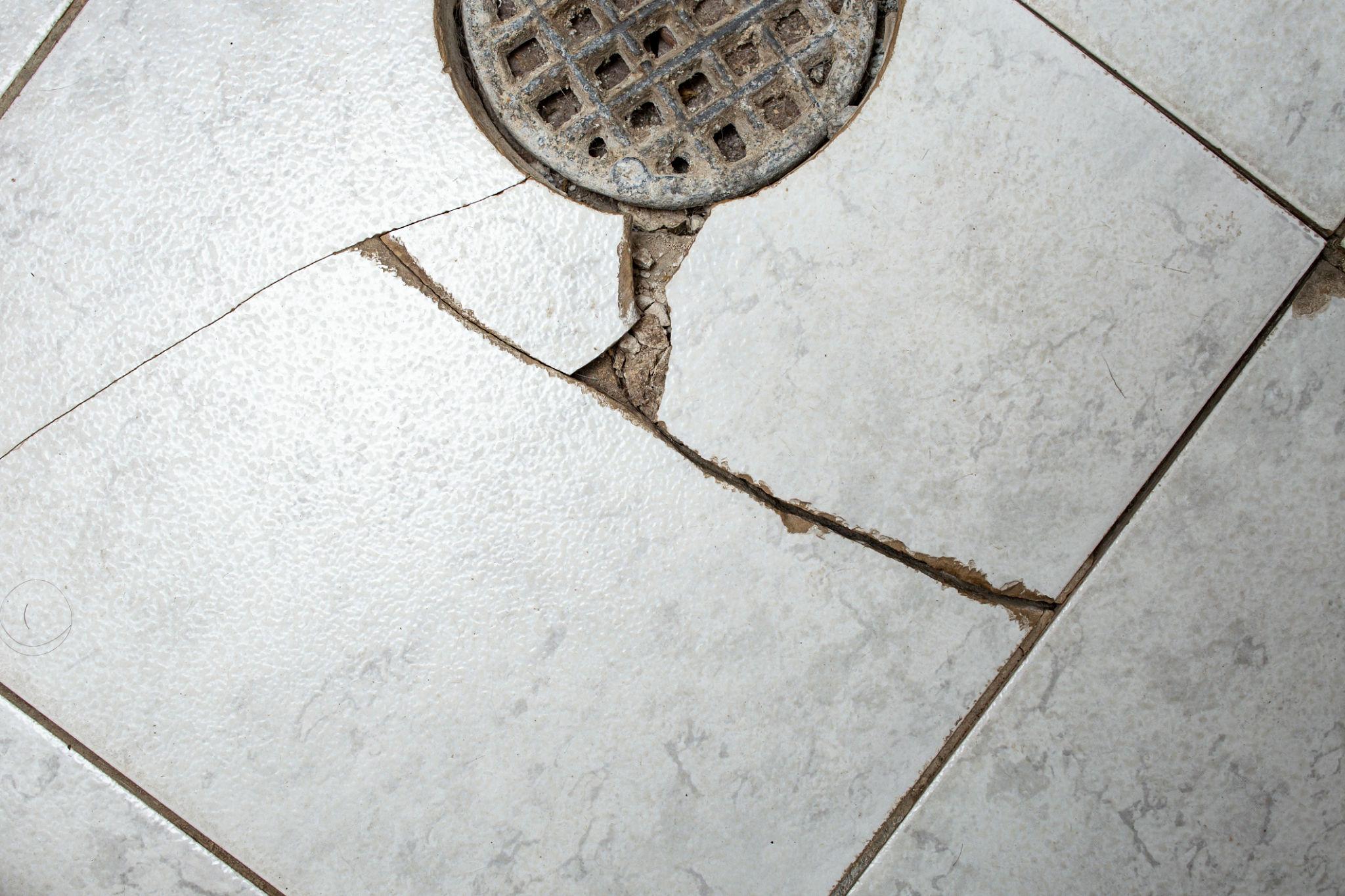
Cracked tiles and missing grout can allow water to reach the underlying substrate.
However, regrouting alone may not resolve an existing leakage problem if the waterproofing membrane beneath the tiles has already deteriorated.
The underlying condition should be assessed before selecting a repair method.
4. Recurring Leakage After Showering
If damp patches become more noticeable after showering, the shower floor, wall-to-floor junctions, drainage outlet and surrounding pipe connections should be inspected.
Repeated water exposure can reveal defects that may not be noticeable during normal bathroom use.
What Causes Toilet Waterproofing Failure?
Understanding the underlying cause is essential before carrying out waterproofing repairs.
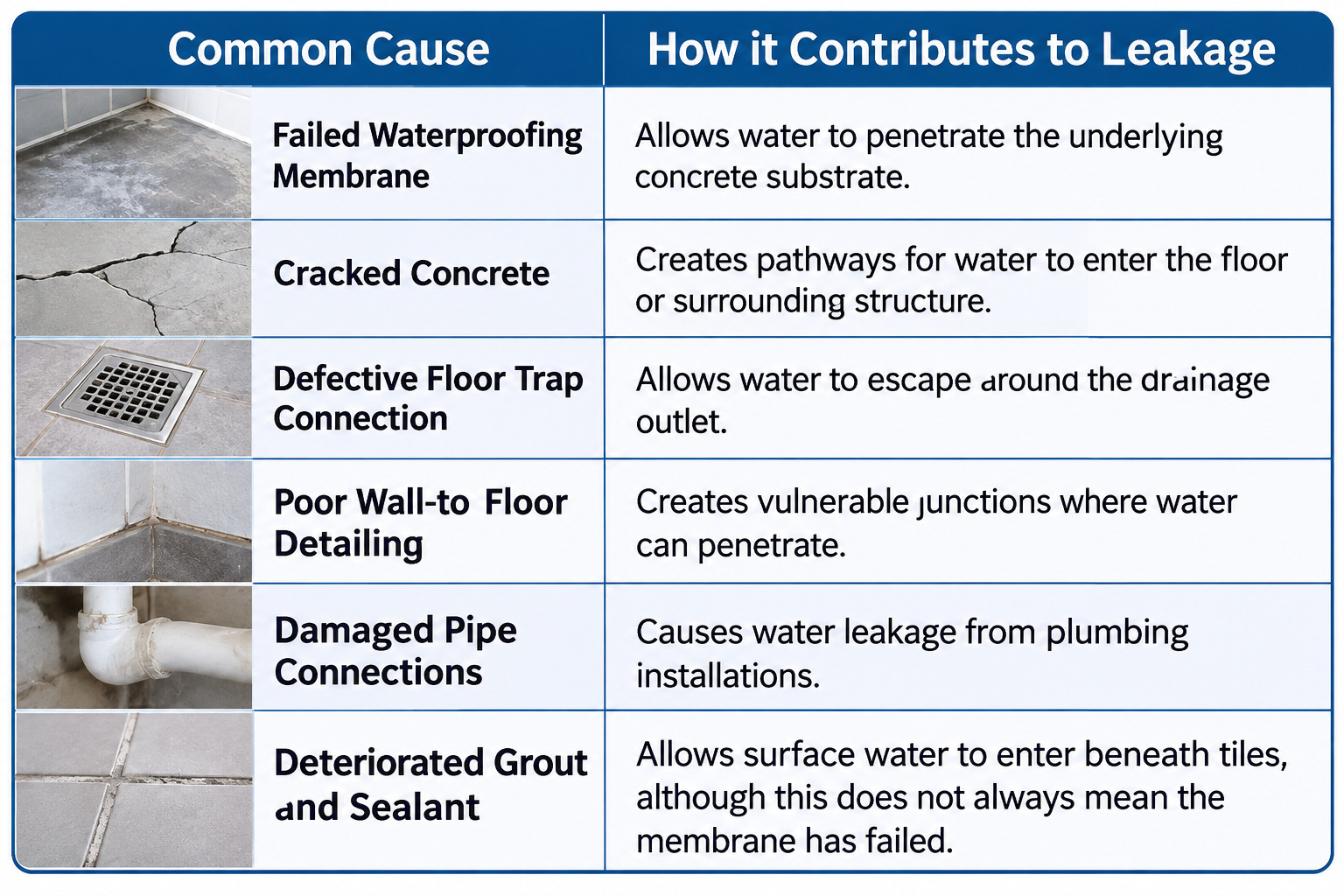
Important: Not every toilet leak requires a complete waterproofing replacement. Plumbing defects should be distinguished from waterproofing failures to avoid unnecessary repairs.
Our Toilet Waterproofing Process
A reliable bathroom waterproofing system depends on proper diagnosis, surface preparation, compatible materials and correct application.
Step 1: Site Inspection and Leakage Assessment
Inspect the affected bathroom and surrounding areas to identify possible leakage sources. Where necessary, assess plumbing connections, floor traps, cracks and waterproofing details.
Step 2: Surface Preparation
Clean the treatment area and remove loose, contaminated or deteriorated materials where required. Proper preparation helps ensure suitable adhesion between the substrate and waterproofing material.
Step 3: Joint and Crack Treatment
Repair identified cracks and vulnerable areas, including wall-to-floor junctions, pipe penetrations and drainage interfaces, using compatible repair materials.
Step 4: Waterproofing Application
Apply the selected waterproofing system according to the substrate condition, product specifications and repair requirements.
Depending on the existing bathroom condition, this may involve:
- Transparent waterproofing treatment on suitable existing tiled surfaces.
- Localised waterproofing repairs around joints and vulnerable details.
- A new under-tile waterproofing membrane when extensive membrane failure requires replacement.
Step 5: Curing, Inspection and Water Testing
Allow the waterproofing material to cure according to the manufacturer's instructions. Where applicable, conduct a water ponding test before reinstating finishes or returning the bathroom to service.
Water testing should only be carried out when the repaired system is ready for testing and the surrounding area can safely accommodate it.
Transparent Waterproofing vs Conventional Toilet Waterproofing
Not every bathroom requires tile removal. The appropriate waterproofing approach depends on the condition of the existing tiles, substrate and underlying waterproofing layer.
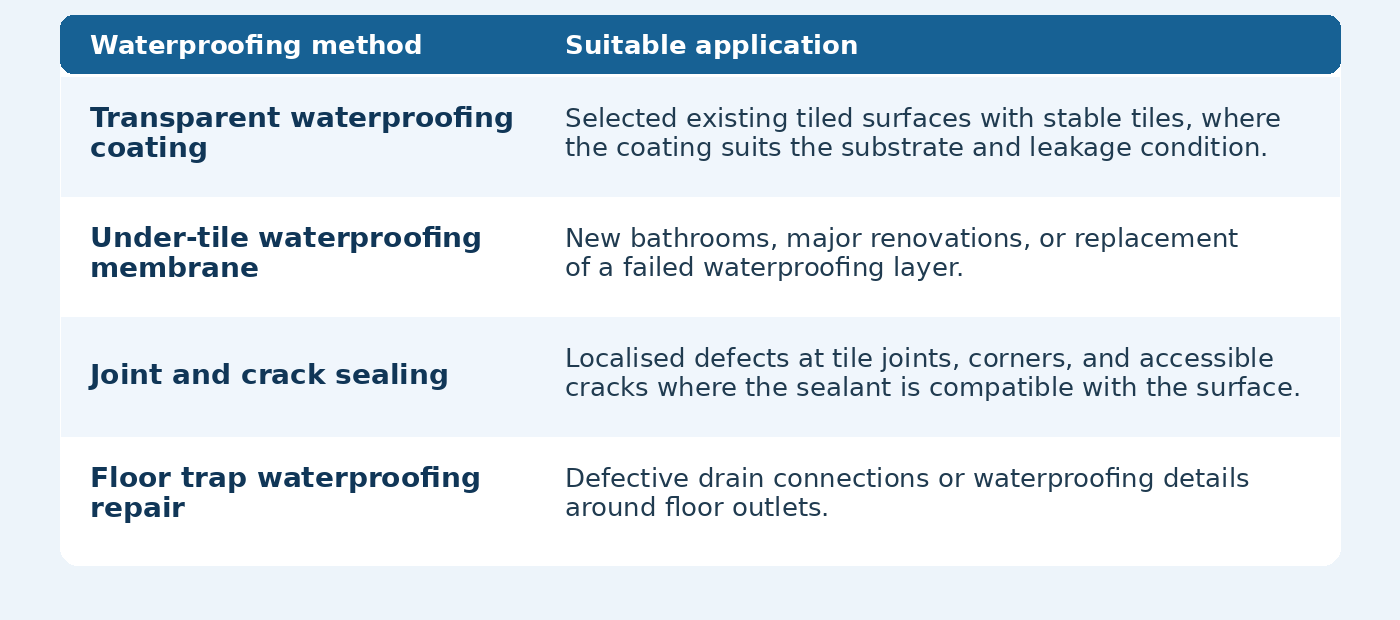
Can Transparent Waterproofing Fix Toilet Leakage Without Hacking Tiles?
In suitable situations, transparent waterproofing can provide a surface-applied solution without removing existing tiles.
However, its effectiveness depends on the condition of the tiled surface, grout, joints and underlying substrate.
It may not be appropriate when:
- The underlying waterproofing membrane has extensively failed.
- Tiles are loose, hollow or severely damaged.
- Water is escaping through concealed plumbing.
- The concrete substrate has significant cracks or movement.
- Leakage originates from defective drainage connections.
Transparent waterproofing should therefore be selected according to the actual leakage condition rather than used as a universal solution.
Why Choose QingLong as Your Toilet Waterproofing Contractor?
Selecting the right waterproofing contractor is important because ineffective repairs can result in recurring leakage, additional maintenance and unnecessary renovation costs.
QingLong Waterproofing brings over 30 years of waterproofing industry experience, supported by waterproofing material manufacturing and product development capabilities.
Our approach focuses on matching suitable materials and application methods to the actual site requirements.
Why property owners can consider QingLong:
- 30+ Years of Industry Experience: Established waterproofing industry experience in waterproofing materials and solutions.
- Waterproofing Material Expertise: Understanding of different waterproofing systems, applications and substrate requirements.
- Practical Leakage Assessment: Identify potential water entry points before recommending suitable repairs.
- Suitable Material Selection: Match waterproofing materials to the surface condition and application requirements.
- Residential and Commercial Applications: Solutions for houses, apartments, offices and commercial properties.
- Malaysia-Based Operations: Supported by QingLong's local manufacturing and material supply capabilities.
Our objective is to help property owners address the source of water penetration and select a suitable waterproofing solution for long-term building protection.
Contact QingLong – Your Toilet Waterproofing Contractor in Malaysia
Experiencing toilet floor leakage, damp bathroom walls or water stains on the ceiling below?
Do not rely on surface patching without understanding the actual leakage source.
QingLong Waterproofing provides waterproofing materials, technical consultation and suitable waterproofing solutions for residential, commercial and industrial applications.
With over 30 years of industry experience and Malaysia-based manufacturing capabilities, we help property owners identify waterproofing requirements and select appropriate solutions.
Contact QingLong Waterproofing at 019-776 6971 to discuss your bathroom leakage problem and arrange an assessment.
Frequently Asked Questions (FAQs)
1. Can toilet waterproofing be repaired without removing tiles?
Yes, some toilet waterproofing problems can be addressed without removing tiles. Transparent waterproofing coatings and localised joint repairs may be suitable when the existing tiled surface is stable and the leakage condition allows surface treatment. Extensive membrane failure may require tile removal.
2. How much does toilet waterproofing cost in Malaysia?
The cost depends on bathroom size, leakage severity, accessibility, surface condition and the waterproofing method required. Localised repairs and complete under-tile waterproofing replacement involve different material and labour requirements. A site assessment is recommended before confirming the repair cost.
3. Why is my downstairs ceiling leaking from the toilet?
Possible causes include a damaged waterproofing membrane, leaking plumbing connections, defective floor traps or water penetration through cracks and floor junctions. The source should be identified before repairing the affected ceiling.
4. Can water leak through bathroom tiles?
Yes. Water can penetrate through deteriorated grout, cracks, tile joints and other vulnerable areas. If the underlying waterproofing system is defective, moisture may travel into the concrete substrate and surrounding building materials.
5. How long does toilet waterproofing last?
The service life depends on the waterproofing material, surface preparation, application quality, substrate movement and exposure conditions. Correct installation and appropriate maintenance help support long-term waterproofing performance.
6. Does toilet waterproofing require hacking?
Not always. Some surface-related leakage problems may be addressed using suitable transparent waterproofing or localised repairs. However, extensive membrane failure, damaged substrates and concealed plumbing defects may require hacking to access and repair the affected areas.
7. What is the difference between toilet waterproofing and toilet leakage repair?
Toilet waterproofing focuses on preventing water from penetrating floors, walls and concrete substrates. Toilet leakage repair is a broader service that may involve waterproofing defects, plumbing leaks, drainage connections and damaged building components. Identifying the actual cause determines the appropriate repair.


