

Professional Tile Roof Waterproofing and Leakage Repair in Malaysia
Experiencing a leaking tiled roof whenever it rains? Water stains on your ceiling, damp patches along the walls or recurring roof leaks can indicate problems with your existing roof system.
However, a leaking tile roof does not necessarily require complete roof replacement. Water penetration can occur through cracked roof tiles, deteriorated ridge mortar, damaged flashing, defective roof underlay or poorly sealed roof junctions. Identifying the actual source of water ingress is essential before selecting the appropriate repair method.
QingLong Waterproofing provides professional waterproofing solutions and roof leakage repair services in Malaysia. With over 30 years of waterproofing industry experience, we focus on understanding the cause of water penetration and recommending suitable repair solutions based on the condition of the existing roof.
Whether you are dealing with isolated roof tile damage or recurring leakage after previous repairs, a proper roof assessment can help determine the necessary repair scope and prevent unnecessary replacement work.
Why Do Tile Roofs Leak? 5 Common Causes
Tile roofs are designed to direct rainwater away from the building. However, their performance depends on the condition of multiple components, including roof tiles, ridge details, valleys, flashing and underlay.
Here are five common causes of tile roof leakage in Malaysia.
1. Cracked or Broken Roof Tiles
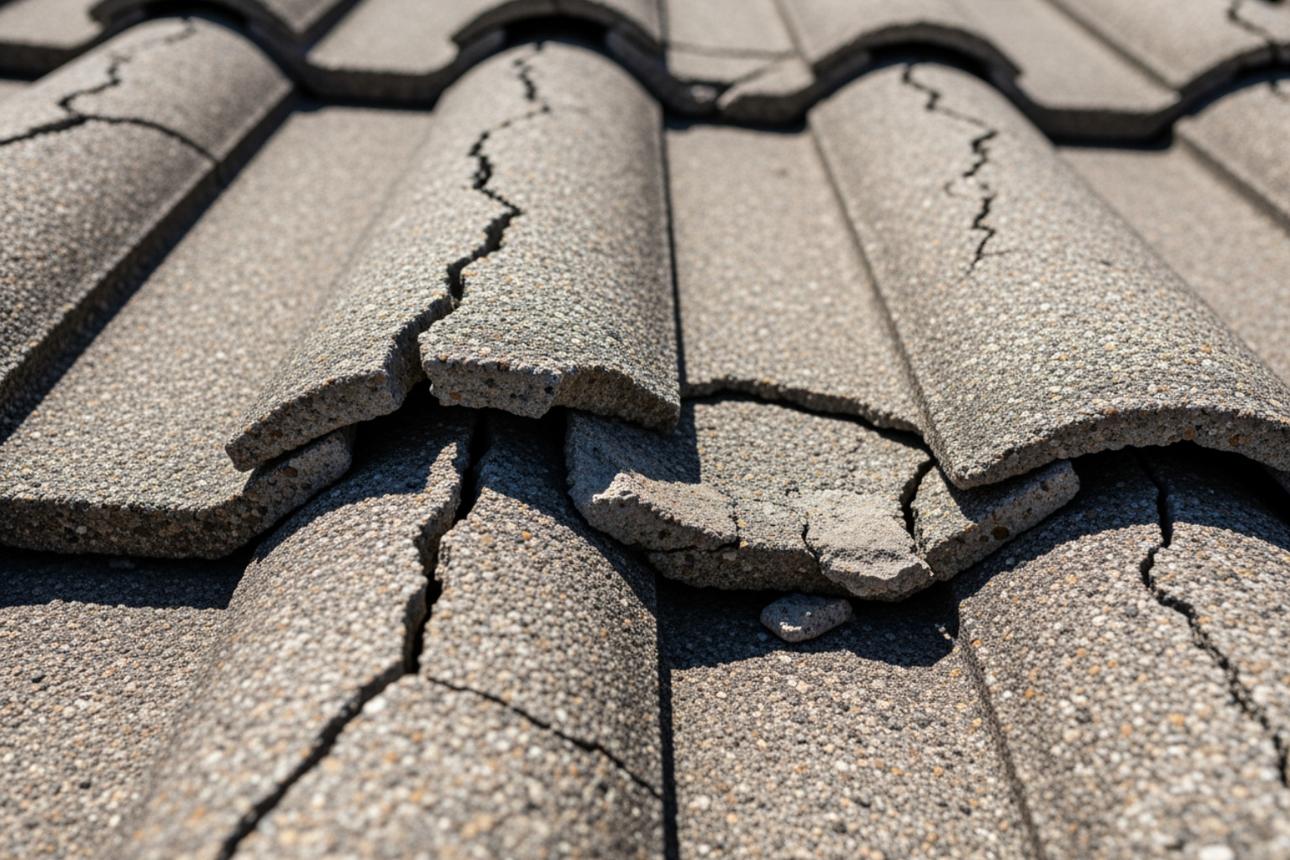
Roof tiles can crack or become displaced due to ageing, physical impact, weather exposure or movement of the supporting structure.
Even a small opening can allow rainwater to penetrate beneath the tiles, potentially affecting the roof underlay and surrounding structures.
Recommended repair: Replace damaged tiles with compatible replacements and inspect the underlying waterproofing layer for additional damage.
2. Deteriorated Ridge and Hip Mortar
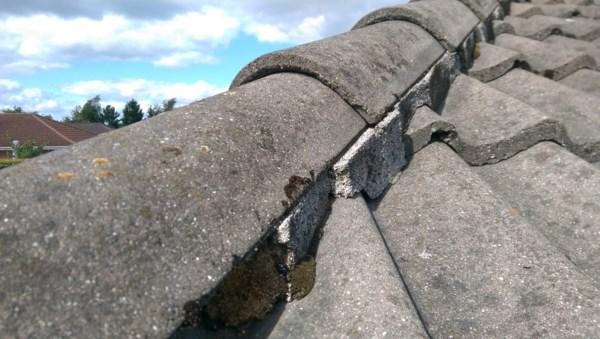
Ridge and hip tiles are commonly secured using mortar or suitable roofing systems. Over time, mortar can crack, loosen or deteriorate due to weather exposure and natural building movement.
These gaps can become potential entry points for wind-driven rain.
Recommended repair: Remove loose or deteriorated mortar, prepare the affected area and reinstate the ridge or hip detailing using suitable roofing materials.
3. Leaking Roof Valleys and Flashing
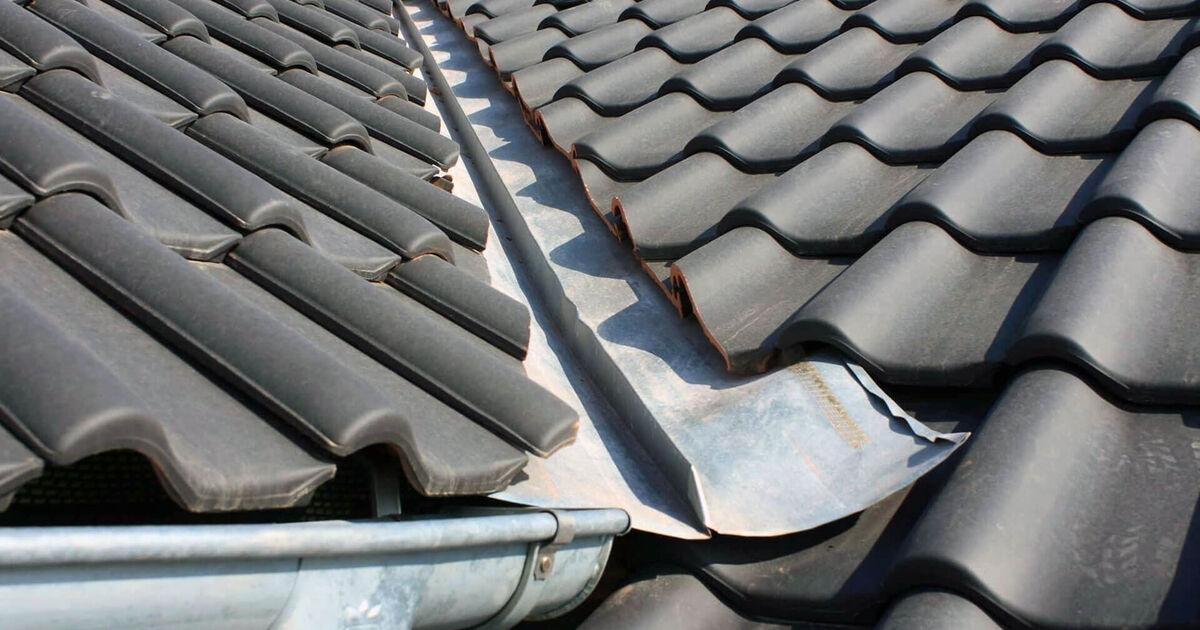
Roof valleys collect and channel rainwater from adjoining roof slopes. Flashing protects vulnerable connections between roof surfaces and other building elements.
Corrosion, damaged flashing, poor overlaps or accumulated debris can disrupt water drainage and cause leakage.
Recommended repair: Inspect the valley channels and flashing connections. Repair or replace defective components and restore proper water flow.
4. Damaged Roof Underlay
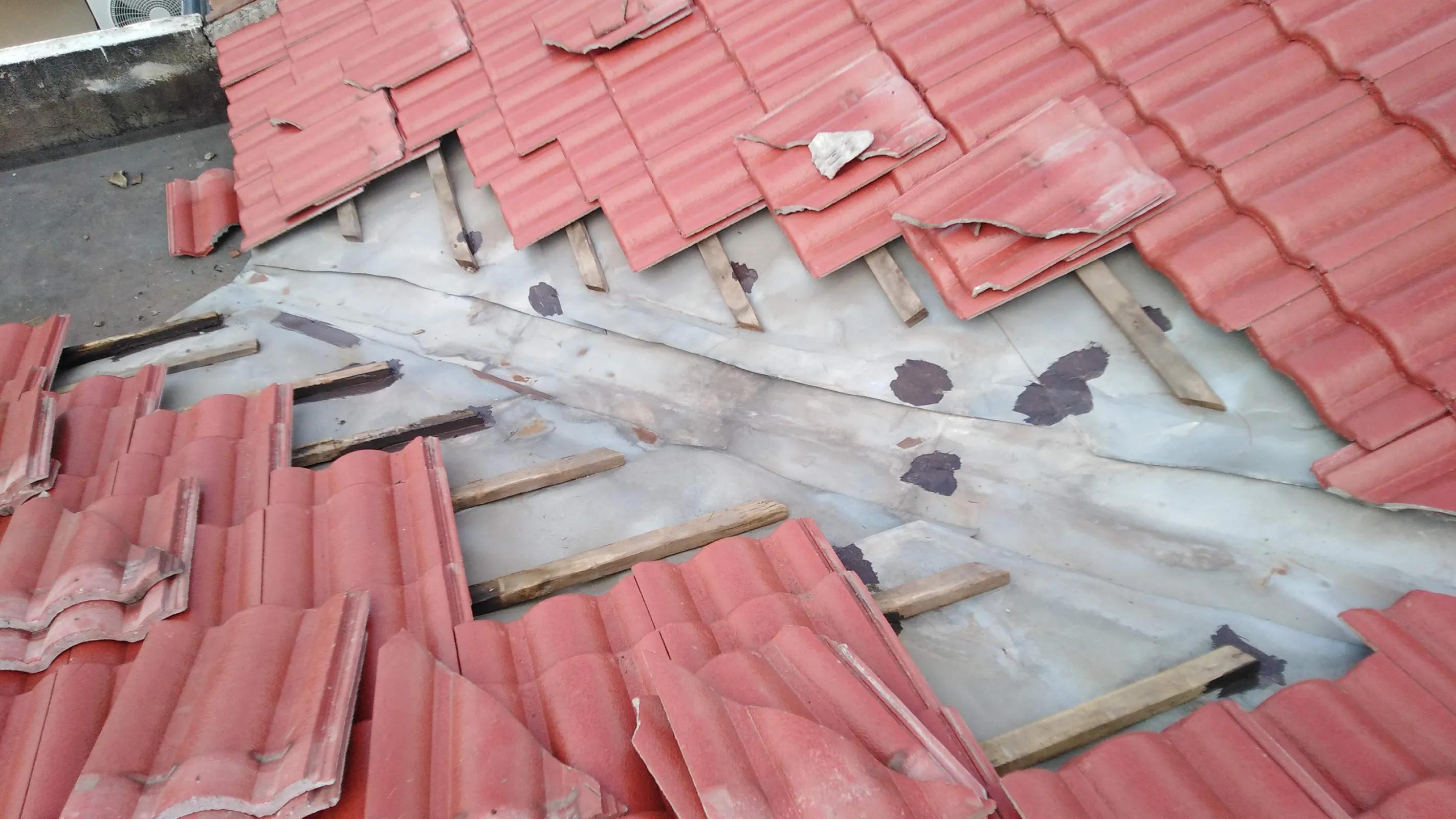
Recommended repair: Lift affected roof tiles where necessary, inspect the underlay and repair or replace damaged sections to restore secondary water protection.
5. Leakage Around Roof Penetrations and Junctions
Roof penetrations such as ventilation pipes, skylights and adjoining wall junctions require proper flashing and waterproof detailing.
Deteriorated seals, poorly installed flashing or gaps around these connections can allow rainwater to enter.
Recommended repair: Identify the defective connection and reinstate the flashing or sealing system using materials compatible with the existing roof construction.
Our Professional Tile Roof Waterproofing and Repair Process
At QingLong Waterproofing, identifying the leakage source is an important part of determining the right waterproofing approach.
Our repair process focuses on the actual condition of the roof rather than applying the same treatment to every leakage problem.
Step 1: Roof Condition Inspection
Assess visible roof tiles, ridge mortar, valleys, flashing, penetrations and other vulnerable areas. Interior water stains are also considered when investigating possible leakage routes.
Step 2: Identify the Source of Water Ingress
Trace potential entry points instead of assuming that the leak originates directly above the ceiling stain. Water can travel along roof components before becoming visible indoors.
Step 3: Recommend Suitable Repair Solutions
Determine whether the problem requires tile replacement, ridge mortar restoration, flashing repair, underlay replacement or compatible waterproofing materials.
Step 4: Carry Out Waterproofing Repairs
Prepare the affected surfaces and complete the necessary repairs using suitable roofing materials, sealants or waterproofing systems according to the roof condition.
Step 5: Final Inspection
Check completed repair areas for visible defects and proper drainage. Where appropriate, conduct water testing based on site conditions and the roof system.
What Is the Best Waterproofing Solution for Tile Roofs?
There is no single waterproofing product that works for every tiled roof. The appropriate solution depends on the roof material, existing damage, water entry points and condition of the underlying structure.
The following table explains some common tile roof leakage problems and their suitable repair approaches.
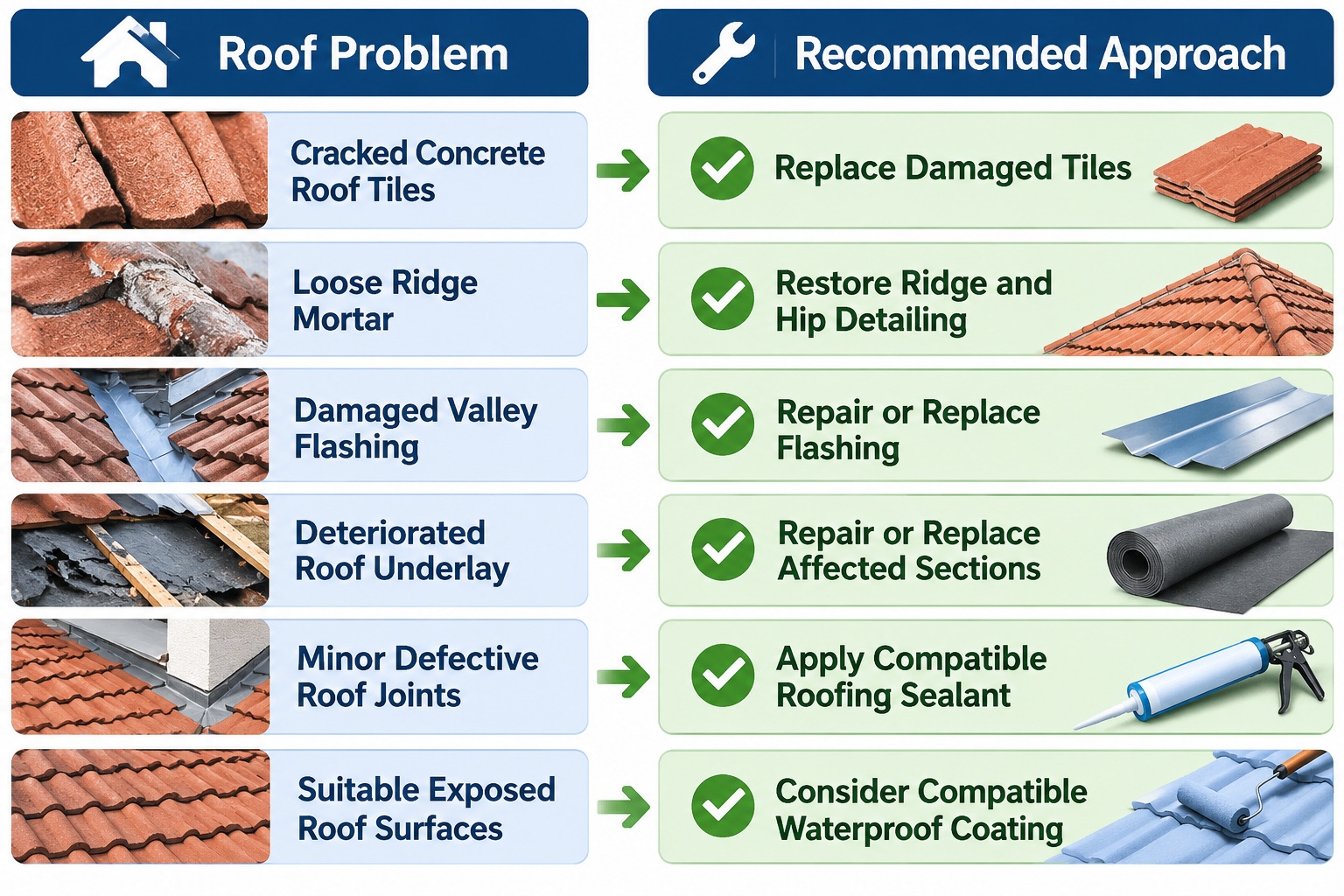
Can Waterproof Coating Be Applied Directly to Roof Tiles?
Waterproof coating may be suitable for certain compatible roof surfaces, but it should not be treated as a universal solution for tiled roofs.
Before applying any coating, several factors must be considered:
Compatibility with the existing roof tile material.
Surface cleanliness and preparation.
Existing cracks, loose components and structural defects.
Exposure to sunlight, rainwater and weather conditions.
Product application requirements and recommended thickness.
For example, coating over a broken roof tile does not restore the integrity of the damaged tile. Likewise, applying sealant over defective valley flashing may not correct the underlying drainage problem.
The right waterproofing solution starts with identifying the actual leakage source, not simply applying more waterproofing material.
When Should You Hire a Tile Roof Waterproofing Specialist?
Roof leakage problems should be investigated early, especially in Malaysia, where frequent rainfall and prolonged exposure to outdoor weather can accelerate deterioration of vulnerable roof components.
Consider arranging a professional roof inspection if you notice:
Water stains appearing on ceilings after rainfall.
Recurring leakage despite previous waterproofing work.
Cracked, displaced or missing roof tiles.
Loose or deteriorated mortar around ridge tiles.
Damp patches near roof valleys or wall junctions.
Water dripping around skylights or ventilation pipes.
Musty smells or dampness around the roof structure.
Early identification helps determine whether localized repairs are sufficient or more extensive roof restoration is necessary.
Why Choose QingLong Waterproofing in Malaysia
Choosing a waterproofing contractor involves more than finding someone who can apply a coating or seal a visible crack. Understanding waterproofing materials, surface conditions and the causes of water penetration is equally important.
QingLong Waterproofing brings over 30 years of waterproofing industry experience, supported by manufacturing and product development capabilities.
Here is what supports our approach:
1. Over 30 Years of Waterproofing Industry Experience
Our experience in waterproofing materials and building protection gives us an understanding of different waterproofing requirements and application conditions.
2. Established Malaysian Operations
QingLong's Malaysian subsidiary, QingLong Building Supplies Sdn. Bhd., was established in 2015, supporting our local presence in the Malaysian construction and waterproofing industry.
3. In-House Manufacturing Capabilities
Our manufacturing and production capabilities support the supply of waterproofing materials for different building applications.
4. Focus on Suitable Waterproofing Solutions
We emphasize identifying the source of water ingress and assessing the existing surface before recommending suitable repair materials and application methods.
5. Waterproofing Product and Industry Credentials
Our business and product ecosystem includes relevant industry certifications and credentials such as SIRIM, CIDB and other applicable certifications. Product-specific certification should always be checked against the relevant product.
Whether you are managing a residential property, commercial building or an older tiled roof, QingLong aims to provide practical waterproofing recommendations based on the actual condition of the building.
Looking for a Reliable Tile Roof Waterproofing Specialist in Malaysia?
A leaking tile roof should not be treated as a surface problem without investigating what is happening beneath the tiles.
Whether you are experiencing recurring roof leakage, damaged roof tiles, deteriorated ridge mortar or water penetration around roof junctions, identifying the actual cause is the first step towards an appropriate repair solution.
QingLong Waterproofing provides professional waterproofing solutions backed by over 30 years of industry experience and local Malaysian operations. ? 019-776 6971
Frequently Asked Questions (FAQs)
1. Can a leaking tile roof be repaired without replacing the entire roof?
Yes. If the damage is localized and the remaining roof system is in good condition, targeted repairs may be sufficient. However, extensive tile deterioration or damaged underlay may require more substantial restoration.
2. How much does tile roof waterproofing cost in Malaysia?
The cost depends on roof size, height, accessibility, tile condition, extent of leakage and required repair methods. A site assessment is recommended to determine the repair scope and provide a more accurate quotation.
3. Can waterproof sealant repair cracked roof tiles?
Sealants may be suitable for certain minor roof joints and detailing. However, cracked or broken roof tiles generally require replacement rather than relying on sealant alone.
4. Why does my tile roof still leak after waterproofing?
Recurring leakage may indicate that the original water entry point was not properly identified or that another roof component remains defective. Water can also travel beneath roof tiles before appearing indoors. A further inspection is necessary to investigate the cause.
5. What is the best waterproofing method for concrete roof tiles?
The best method depends on the condition of the tiles and the underlying roof system. Damaged tiles should be replaced, defective joints repaired and compatible waterproofing coatings considered only where appropriate.
6. How long does tile roof waterproofing last?
The service life depends on the materials used, application quality, roof condition, weather exposure and maintenance. Properly identifying and repairing the original leakage source is essential for long-term performance.
7. Should I waterproof my roof before the rainy season?
A roof inspection before periods of heavy rainfall can help identify cracked tiles, loose ridge mortar, defective flashing and other potential leakage points before they develop into more serious problems.


